
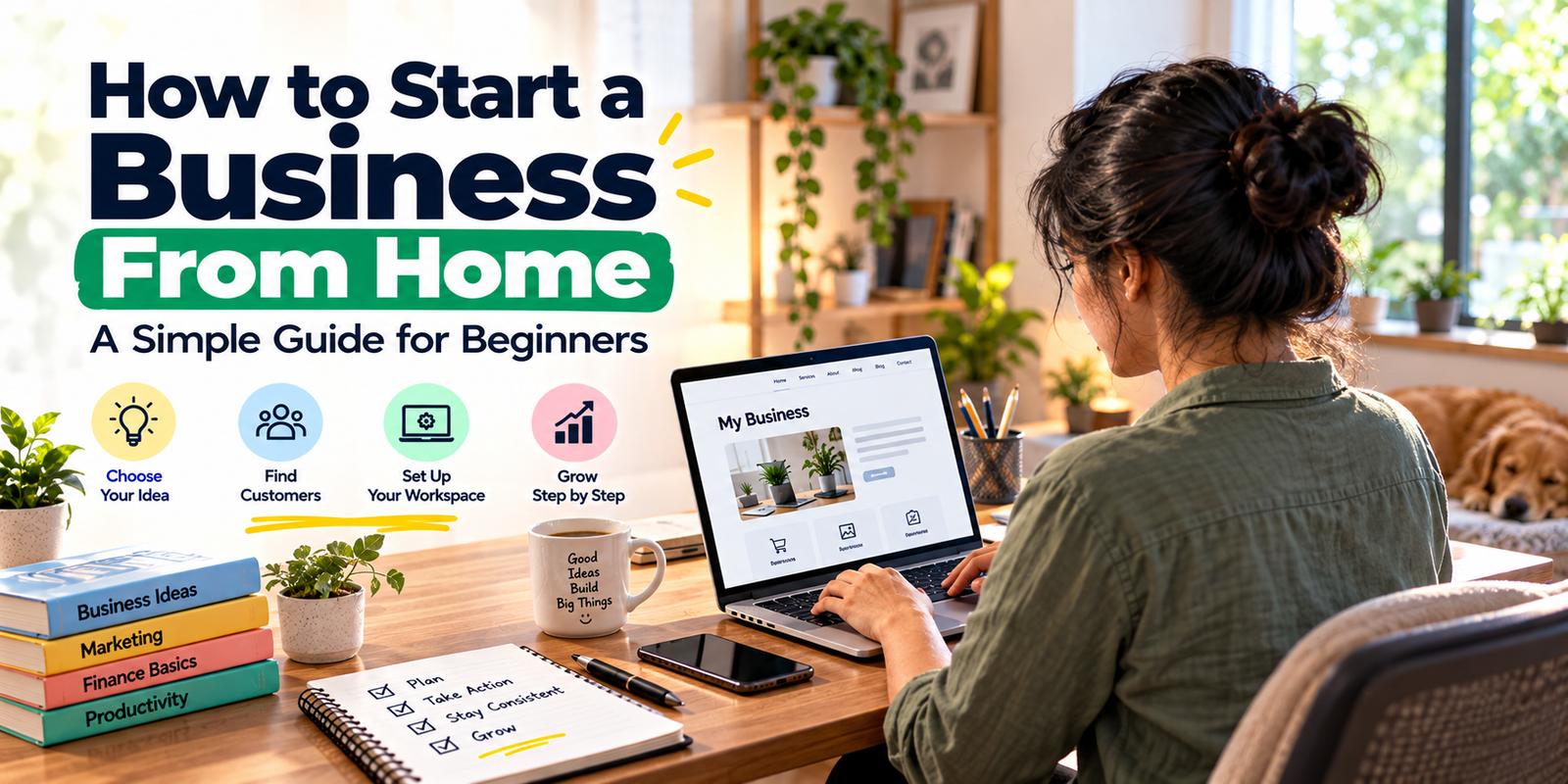
Launching a business doesn’t require a rented office or a big bank balance. For many founders, the first version of the business runs from a home desk with a laptop, a phone, an internet connection, and one skill or product that people will pay for.
The hard part usually isn’t the setup. It’s choosing what to offer, deciding who to offer it to, and landing your first few customers.
If you’re researching how to start a business from home, you don’t need a perfect plan before you begin. Start with a small, workable idea, try it on real people, and refine it as you learn. The steps below show you how.
1. Look at What You Already Know How to Do

A good business idea doesn’t have to be a brand-new invention. Your existing abilities are often the best starting point.
You might build websites, edit videos, write, teach, manage social media accounts, bake, craft handmade items, fix gadgets, or handle office tasks for other companies. List everything you do well, then ask: which of these skills could solve a real problem for someone else?
That question will usually get you to a workable idea faster than scrolling through lists of “most profitable businesses.”
2. Choose Between Selling a Service or a Product
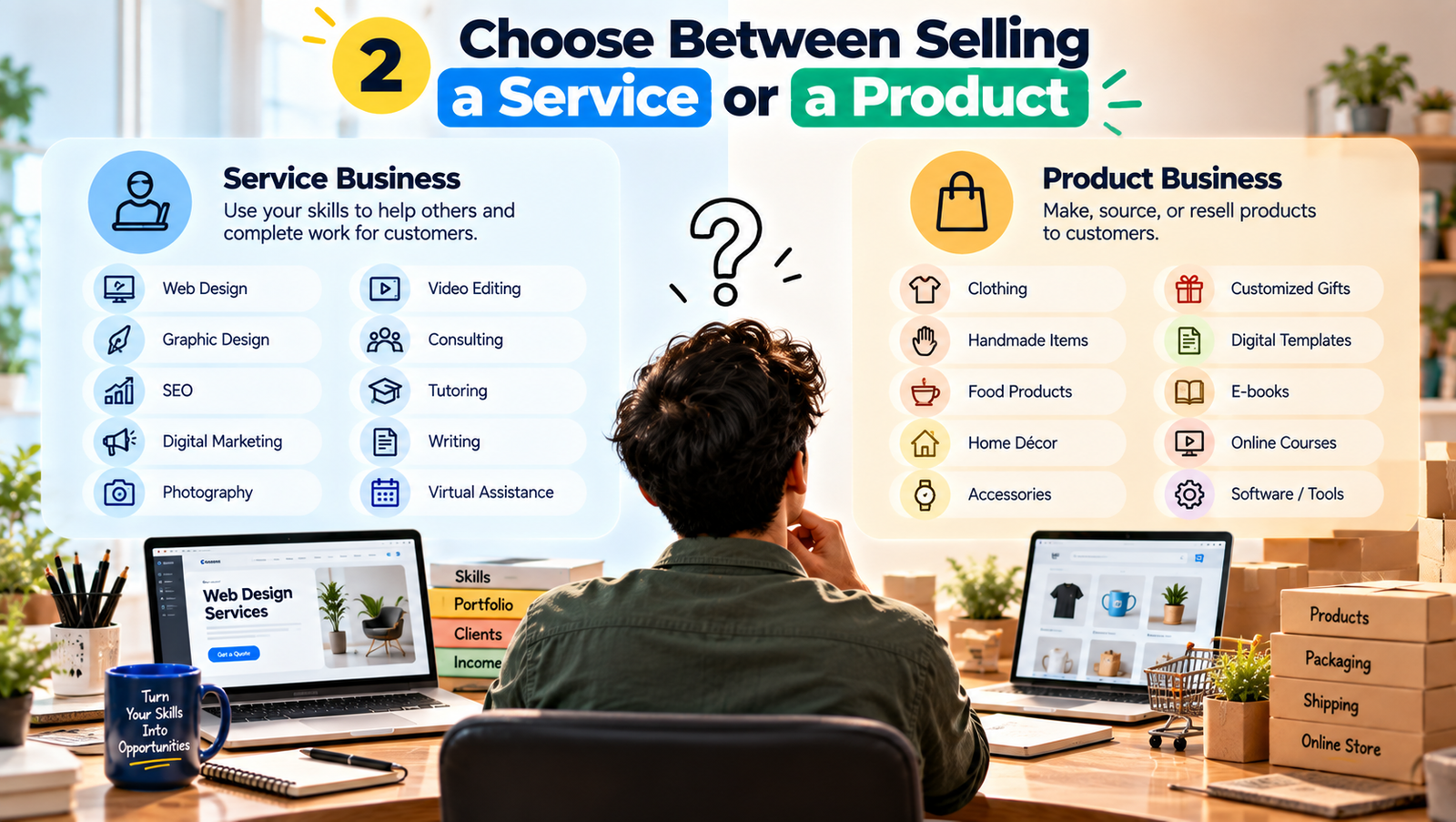
Most home businesses fall into one of three models.
Service-based businesses. You get paid to apply your expertise for clients. Common examples:
- Web design
- Graphic design
- SEO
- Digital marketing
- Photography
- Video editing
- Consulting
- Tutoring
- Writing
- Virtual assistance
Services are often the easiest to launch because there’s no stock to buy.
Physical products. You create, source, or resell items such as:
- Clothing
- Handmade goods
- Food items
- Home décor
- Accessories
- Personalized gifts
This route means managing inventory, packaging, shipping, returns, and production costs.
Digital products. These are delivered online, for example:
- Templates
- E-books
- Online courses
- Design assets
- Printables
- Software
- Web-based tools
Choose the model that matches your skills, budget, available space, and preferred way of working.
3. Find a Specific Customer
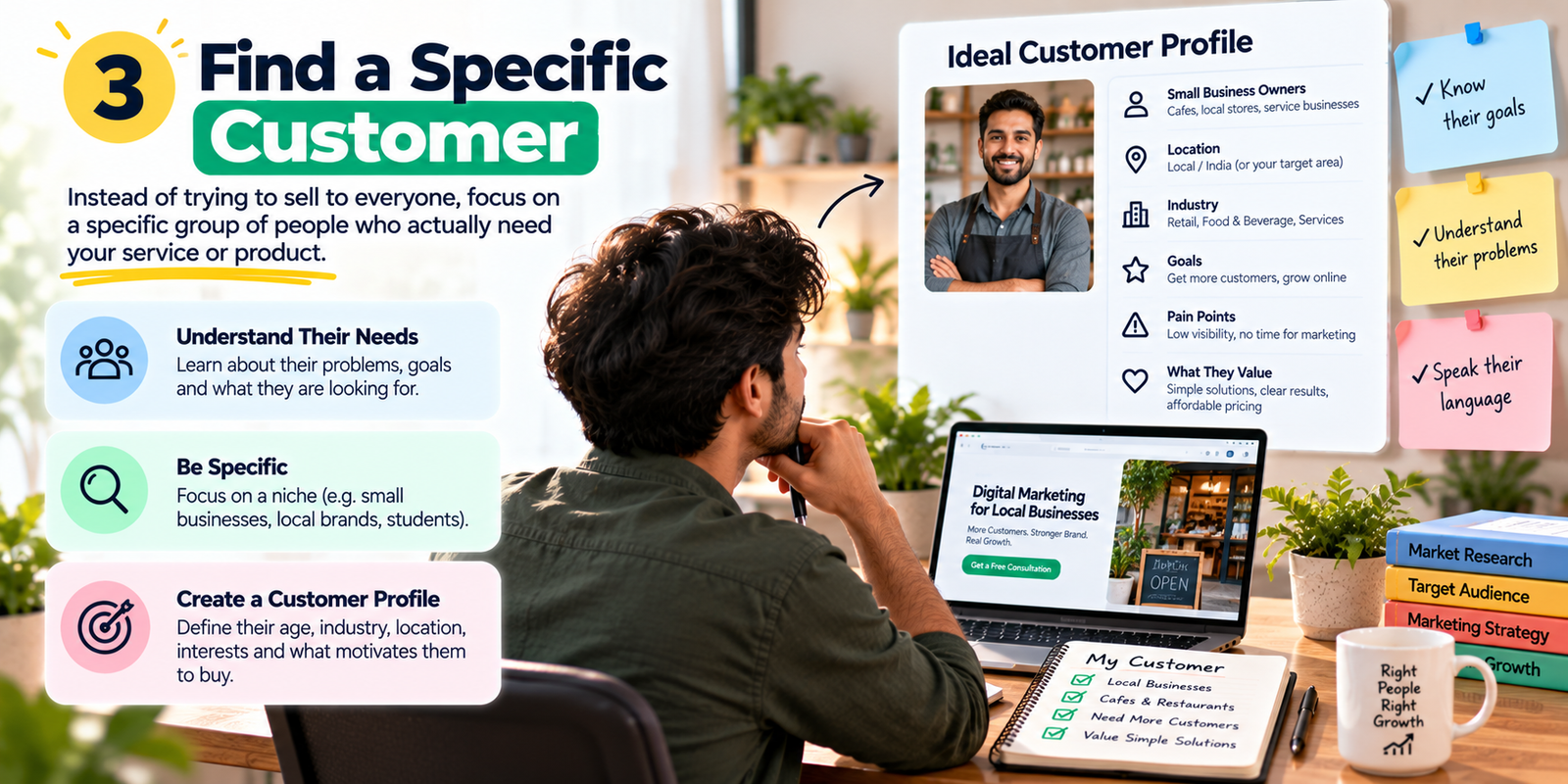
Trying to serve everyone is one of the quickest ways to muddy a new business. Compare these two statements:
- “I offer digital marketing for everyone.”
- “I help small businesses get more website visitors through SEO and content.”
The second one tells people exactly who you serve. It also guides your website copy, pricing, and promotion. Your audience can change later. For now, you just need a clear starting point.
4. Test the Idea Before Spending Heavily
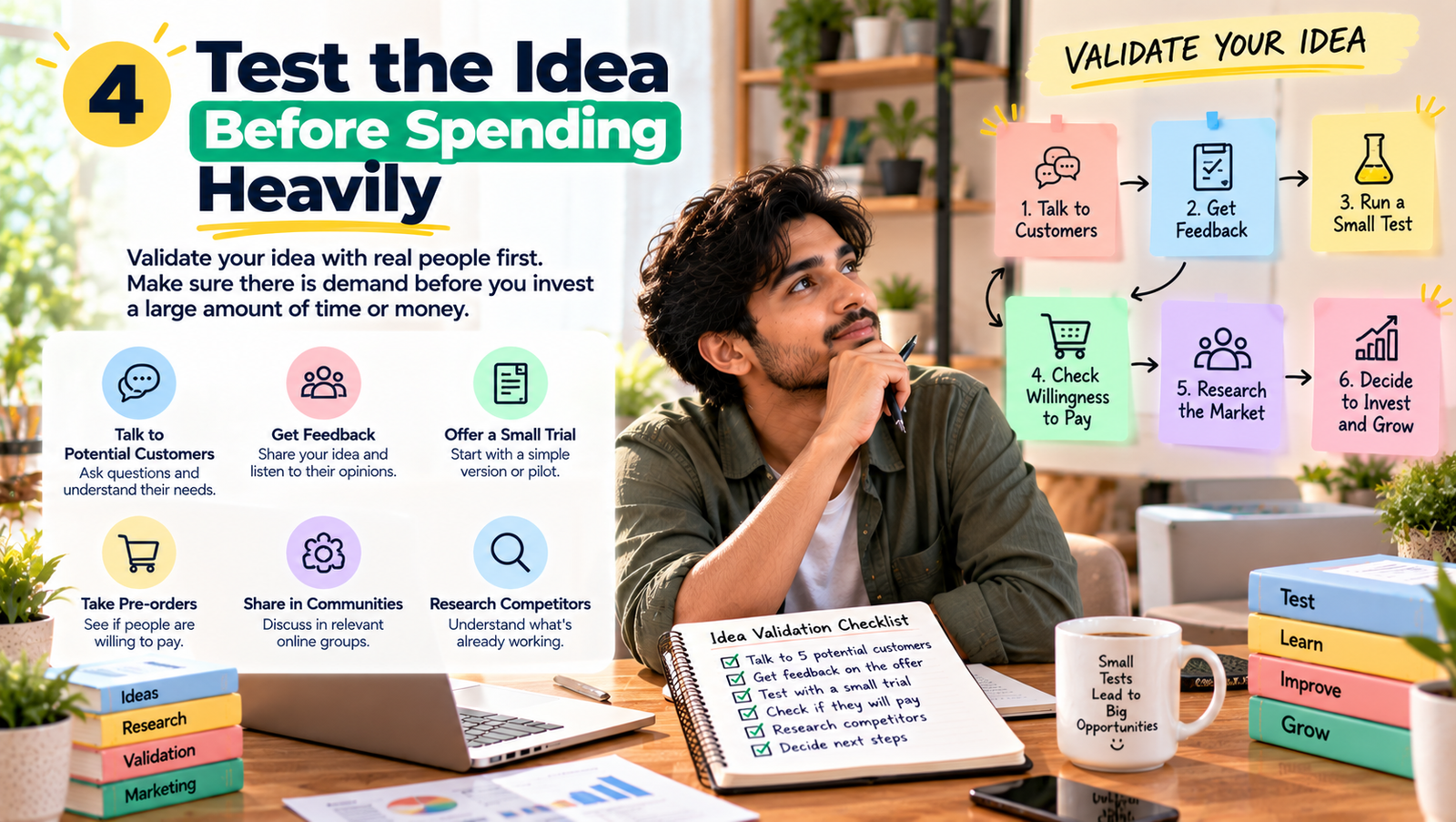
Before buying costly equipment, bulk inventory, or complex software, confirm that people actually want what you plan to sell. Ways to do that:
- Talk to people who might buy
- Show them a sample or prototype
- Offer a small trial service
- Put up a simple landing page
- Accept pre-orders where it makes sense
- Share the idea in relevant online communities
- Reach out to potential clients directly
Watch what people do, not just what they say. Compliments are nice, but someone handing over money is far stronger proof of demand
5. Write Down the Basic Numbers
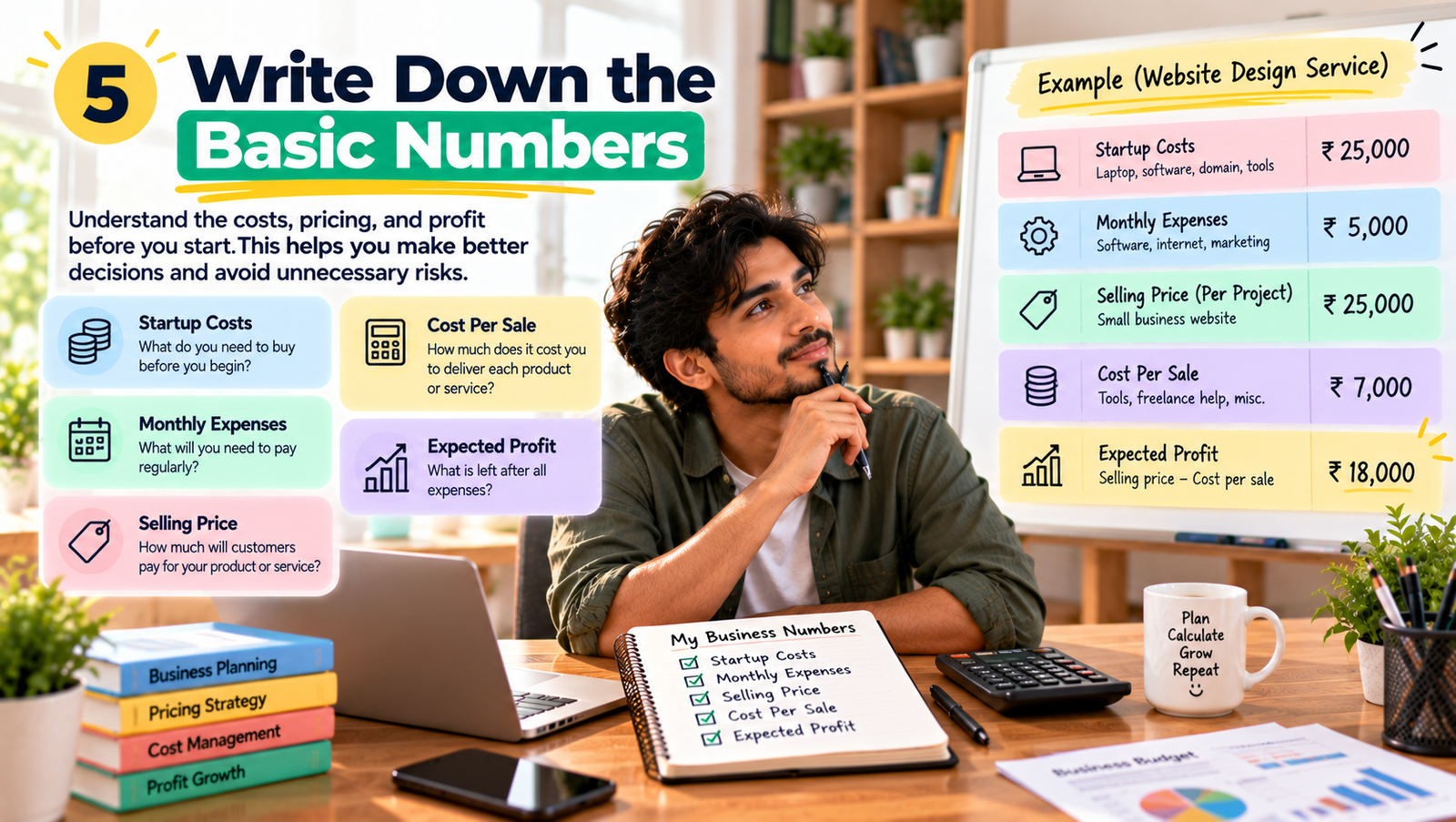
You don’t need a long business plan, but you do need to understand the money. Write down:
- Startup costs: what you must spend before you can begin
- Monthly expenses: what you’ll pay on a recurring basis
- Selling price: what customers will pay
- Cost per sale: what it costs you to make and deliver each product or service
- Expected profit: what’s left after expenses
Product sellers should factor in packaging, shipping, payment fees, returns, and advertising. Service providers should account for software, equipment, subscriptions, taxes, and the hours each project takes.
.
6. Create One Clear Offer
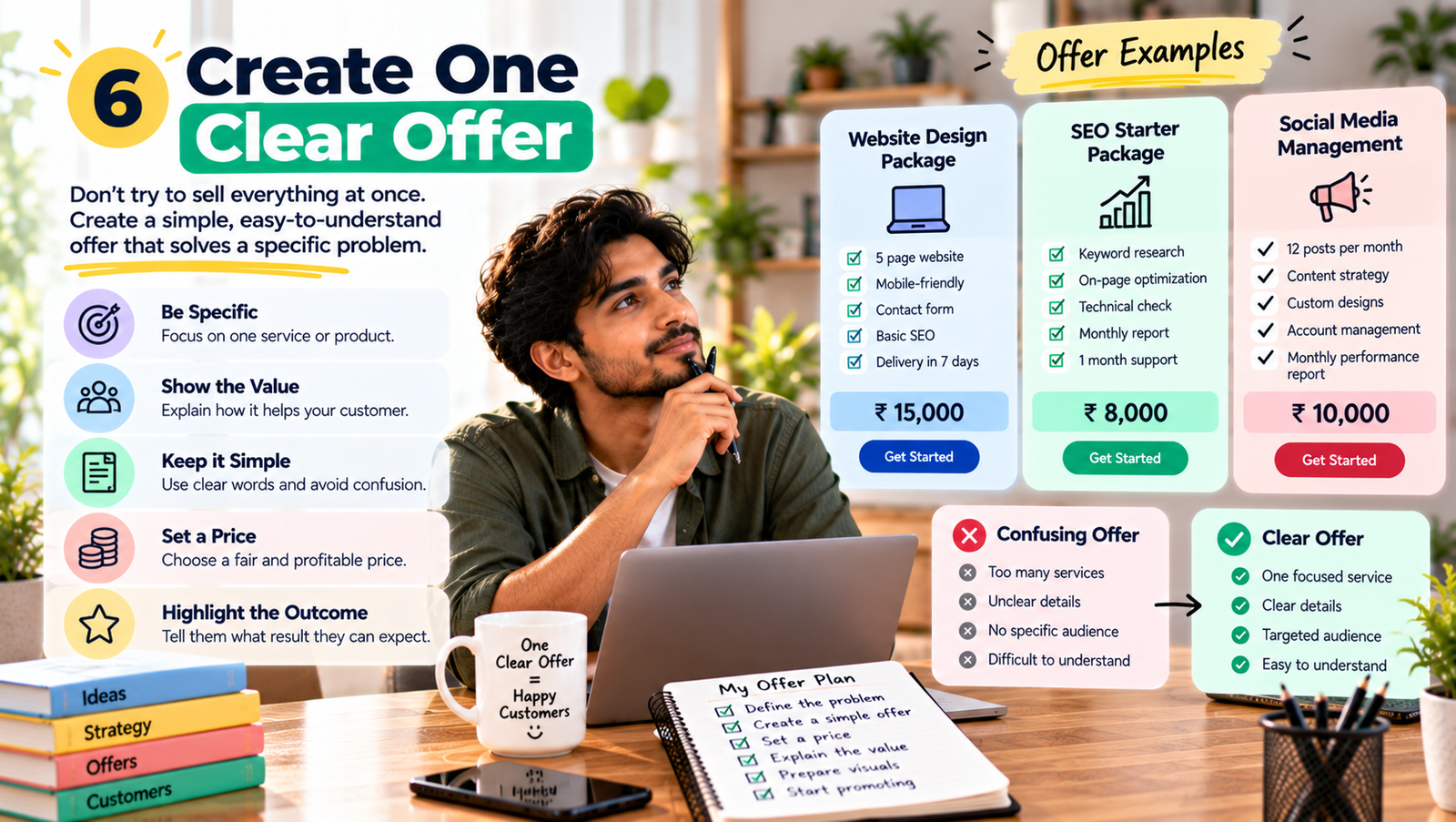
Skip the temptation to launch with twenty services. Begin with a single offer that’s easy to explain. For example:
- Website Design Package: a small-business site with a set number of pages, mobile-friendly design, a contact form, and basic SEO.
- SEO Starter Package: keyword research, on-page fixes, a technical check, and a monthly performance report.
A clear offer makes sales conversations simpler. Once you see what customers want, you can add more packages.
7. Set Up a Small Workspace
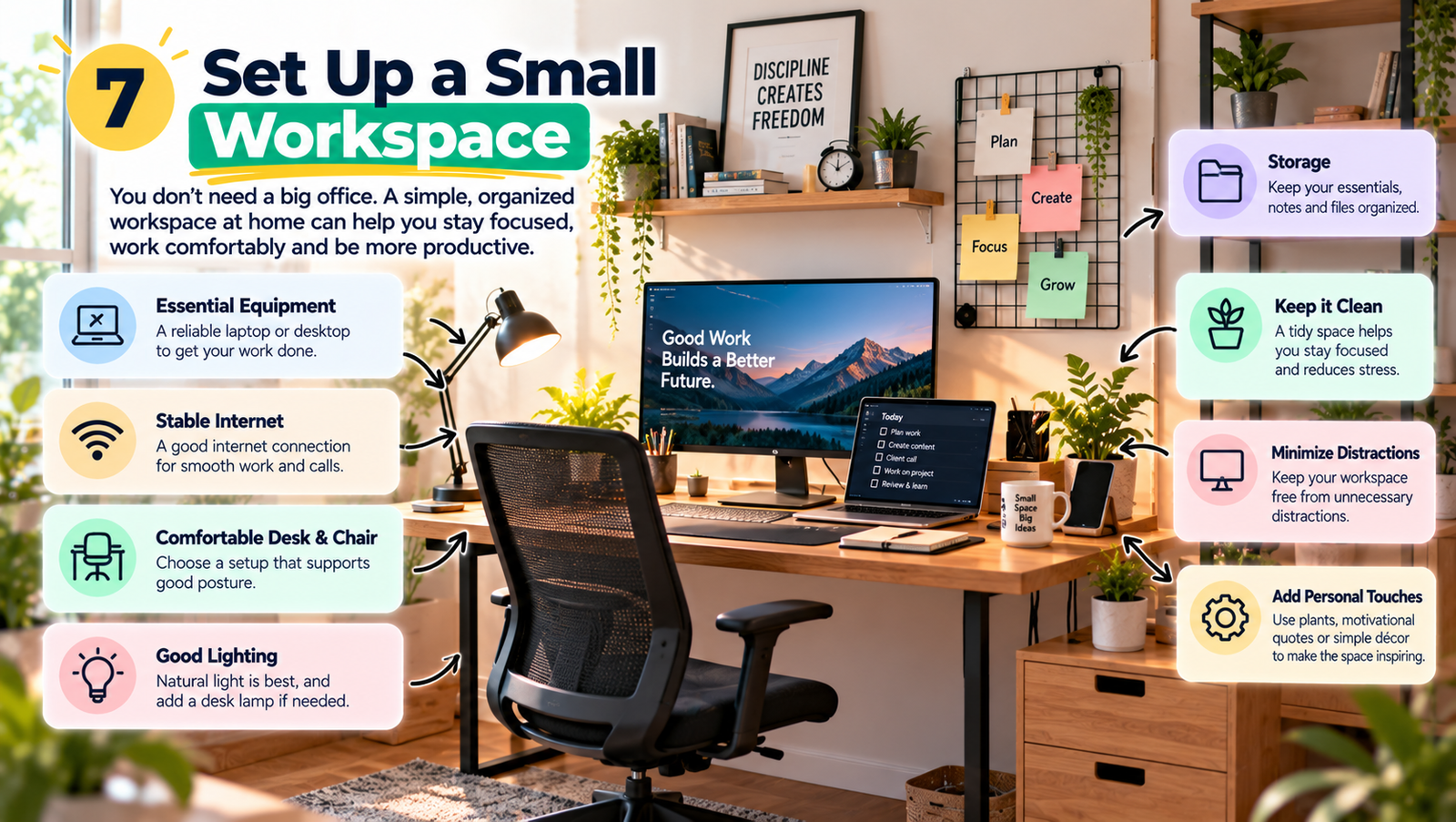
Your home doesn’t have to resemble a corporate office. You just need a spot where you can work comfortably and consistently. Depending on your business, that could include:
- A laptop or desktop
- Dependable internet
- A phone
- A desk
- Storage space
- Good lighting
- A packing area for products
- Any tools specific to your work
Try to keep work hours separate from personal time. When the business lives in your home, work can easily spill into the whole day.
8. Give Your Business a Professional Identity
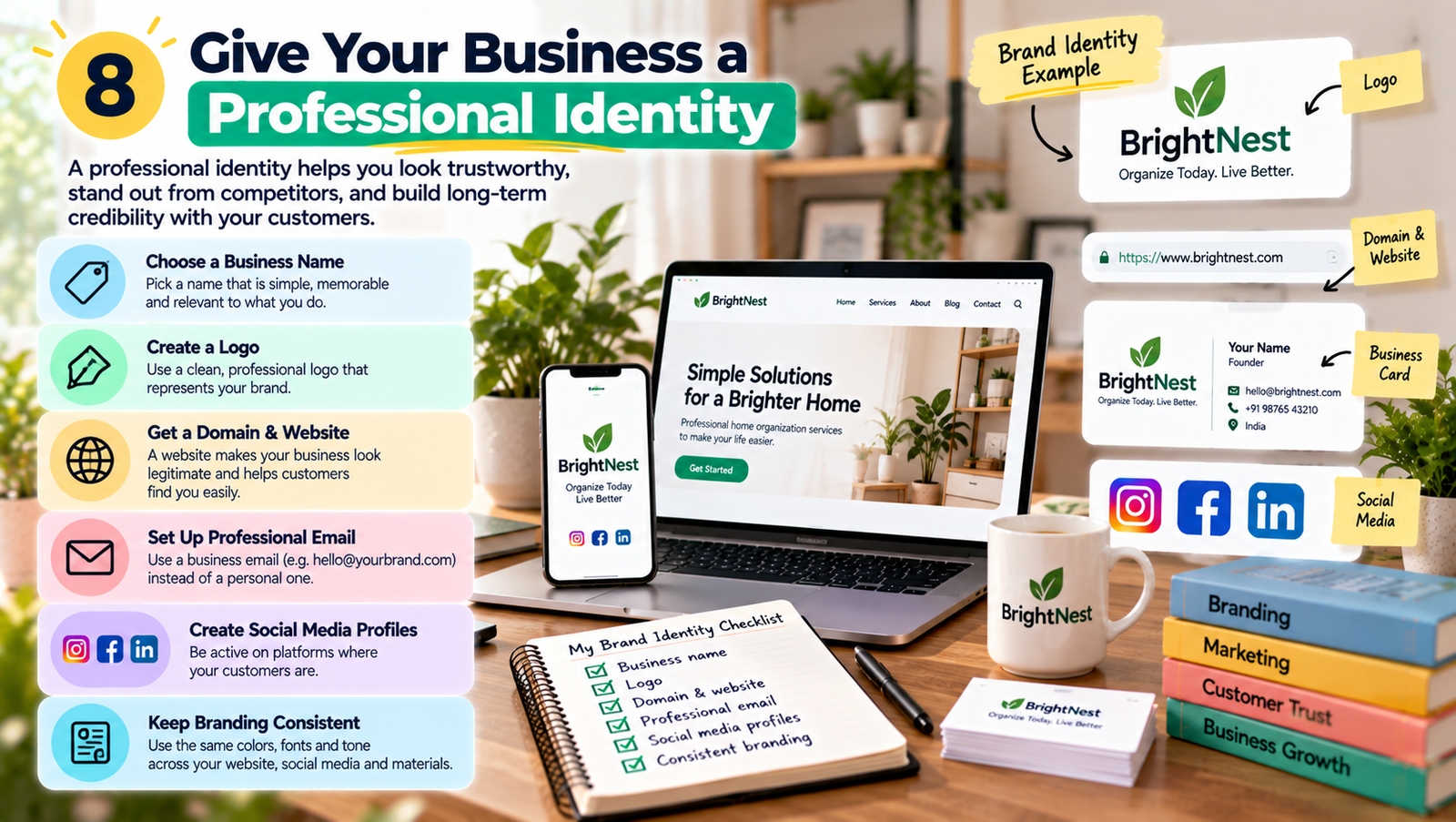
Early on, you don’t need costly branding. Cover the basics:
- A business name
- A simple logo
- Consistent colors
- A professional email address
- A clear description of what you do
- A basic visual style
Customers should recognize your business on your website, social media, invoices, and messages. Spend more effort sharpening your offer than perfecting your logo.
9. Build a Simple Website
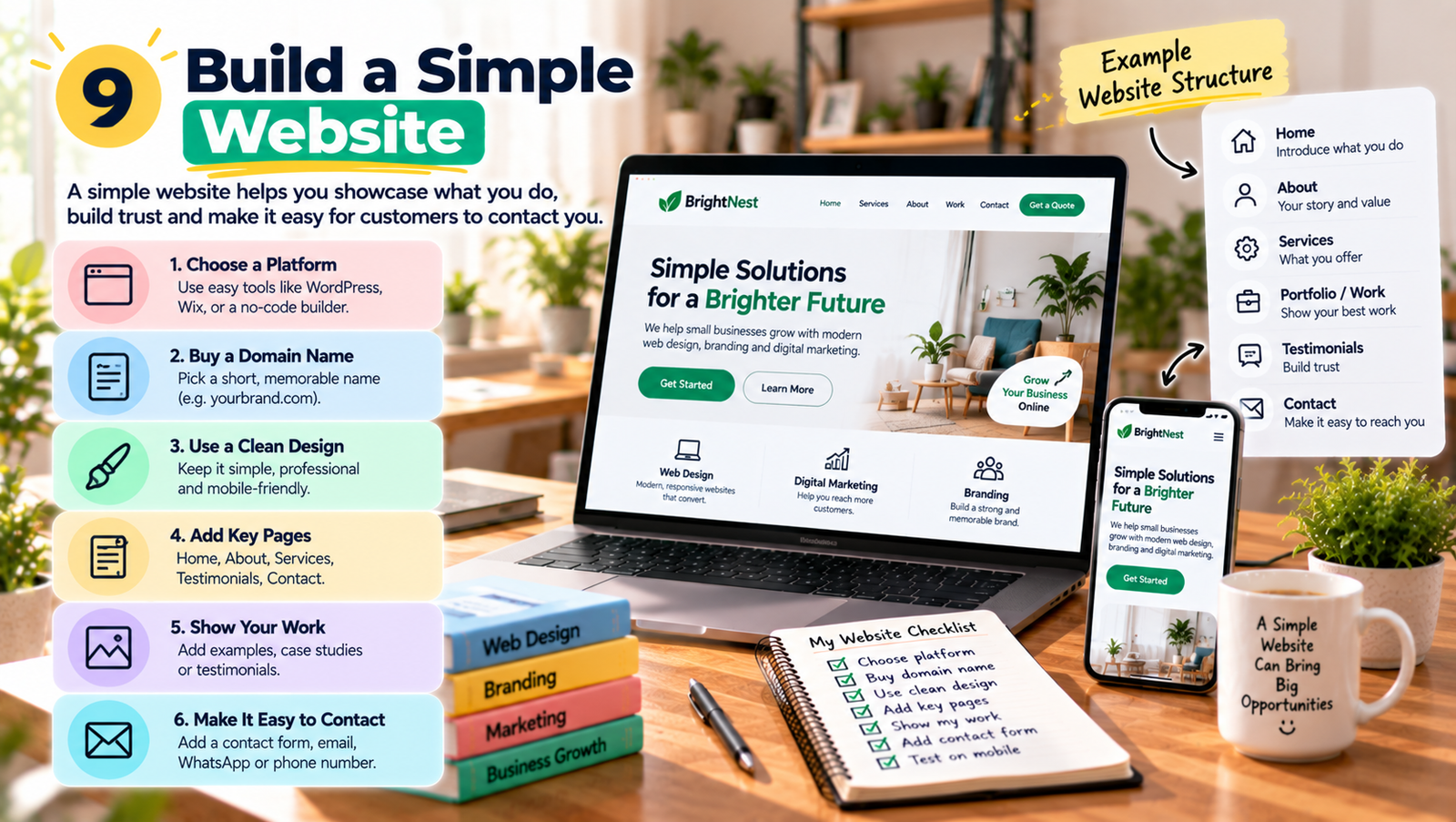
A starter website needs only a few pages:
- Home: what you do and who you help
- Services or Products: what people can buy
- About: who you are and why you’re trustworthy
- Portfolio or Work: examples, where possible
- Contact: an easy way to reach you
Use clear calls to action throughout, such as “Request a Quote,” “Book a Consultation,” “Order Now,” or “Start Your Project.” Visitors should always know what to do next.
10. Start Marketing Before You Feel Ready
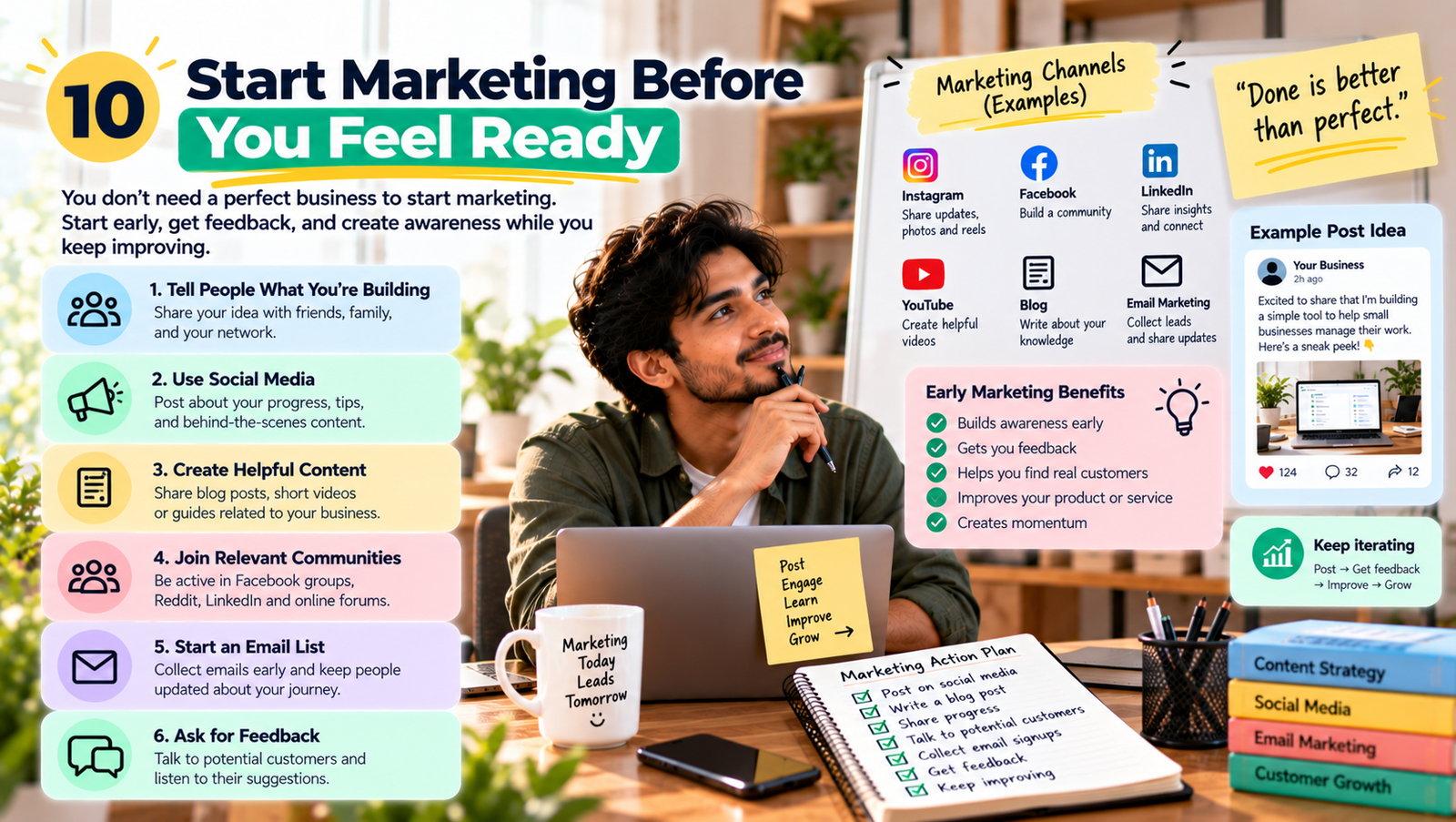
A common mistake is spending weeks building while nobody knows the business exists. Start promoting early, using low-cost methods:
- Social media: share helpful tips, samples of your work, customer questions, and behind-the-scenes moments.
- Direct outreach: contact people or companies that would truly benefit from your offer.
- Referrals: tell friends and contacts about your business and ask them to recommend you when it fits.
- Content marketing: publish articles and videos that answer your audience’s questions.
- Search engine optimization: optimize your site so people find you through relevant Google searches.
You don’t need every channel. Pick one or two that suit your audience and focus there.
11. Get Your First Customer Before Chasing Scale
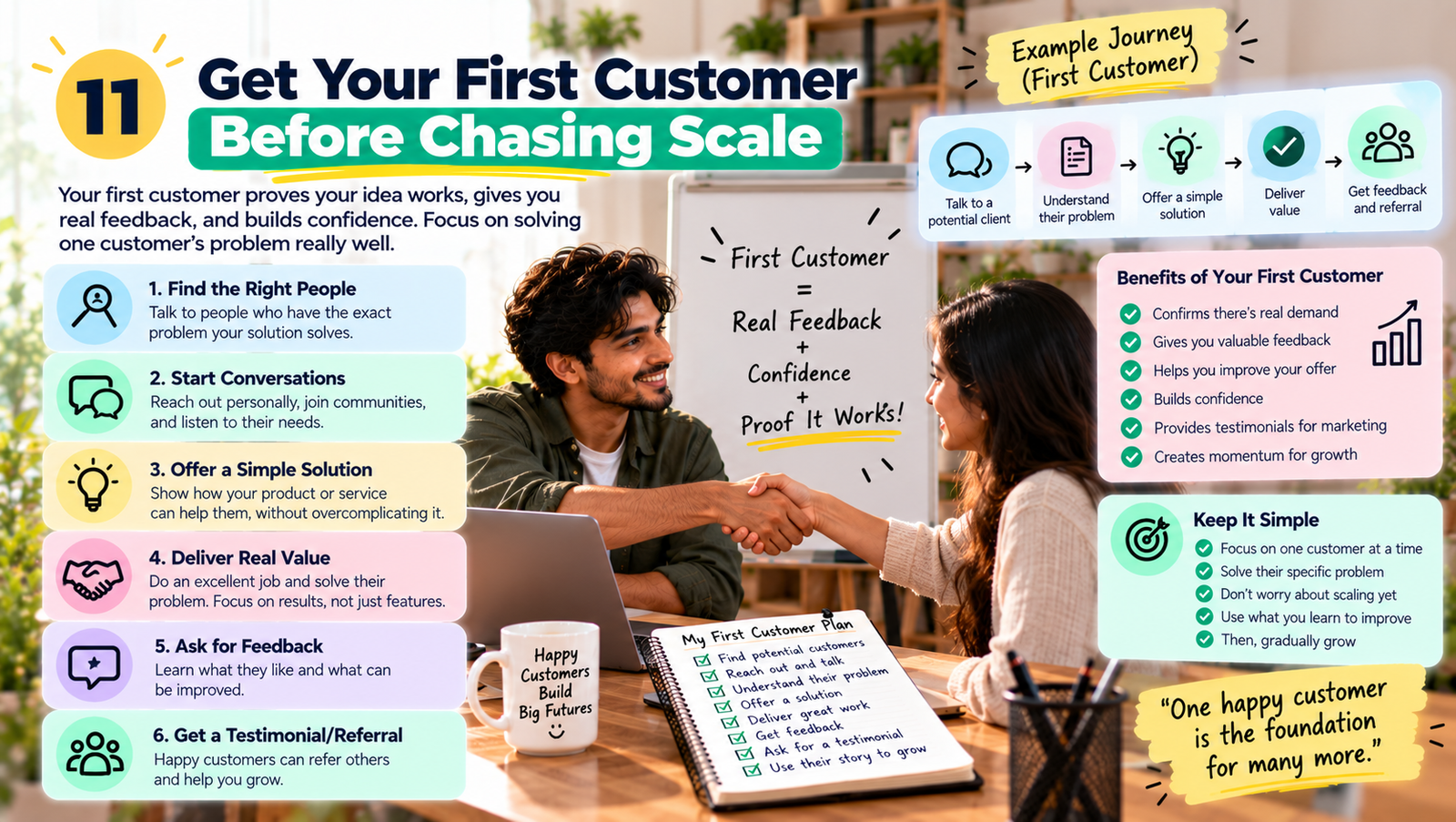
Your first customer matters more than a big follower count, because that first project teaches you:
- What customers really ask for
- Where your process drags
- Which parts of your offer people value
- Whether your pricing works
- What needs fixing
- What people are happy to pay for
Apply those lessons to the next project, then repeat.
12. Turn Good Work Into Proof
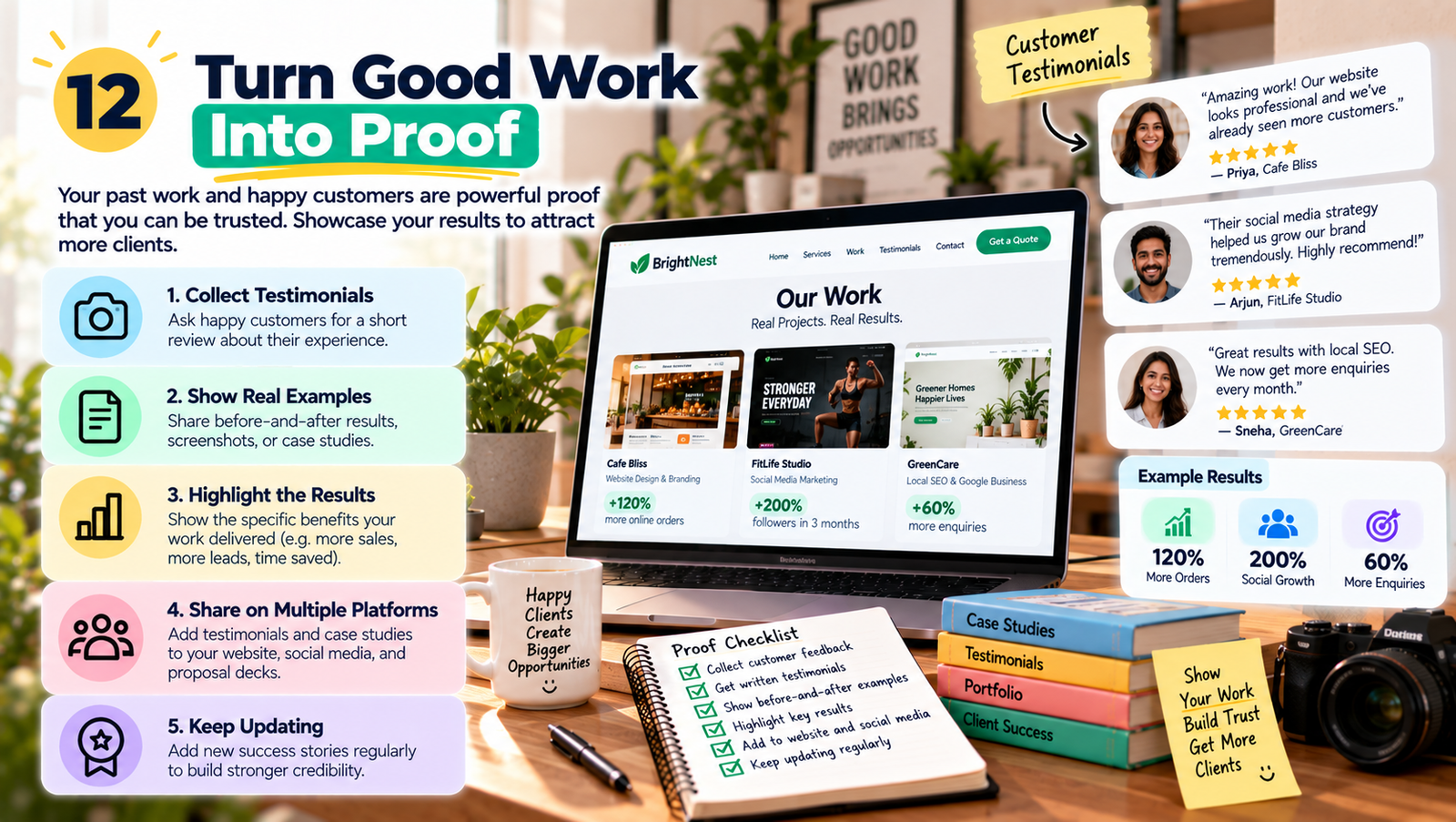
After finishing projects, document them as short case studies covering:
- The situation: what the customer needed
- Your approach: what you did
- The result: what changed afterward
Add genuine testimonials, with permission. Proof matters a lot for a new business, since prospects have no history with you yet.
13. Make Customer Experience Part of Your Strategy
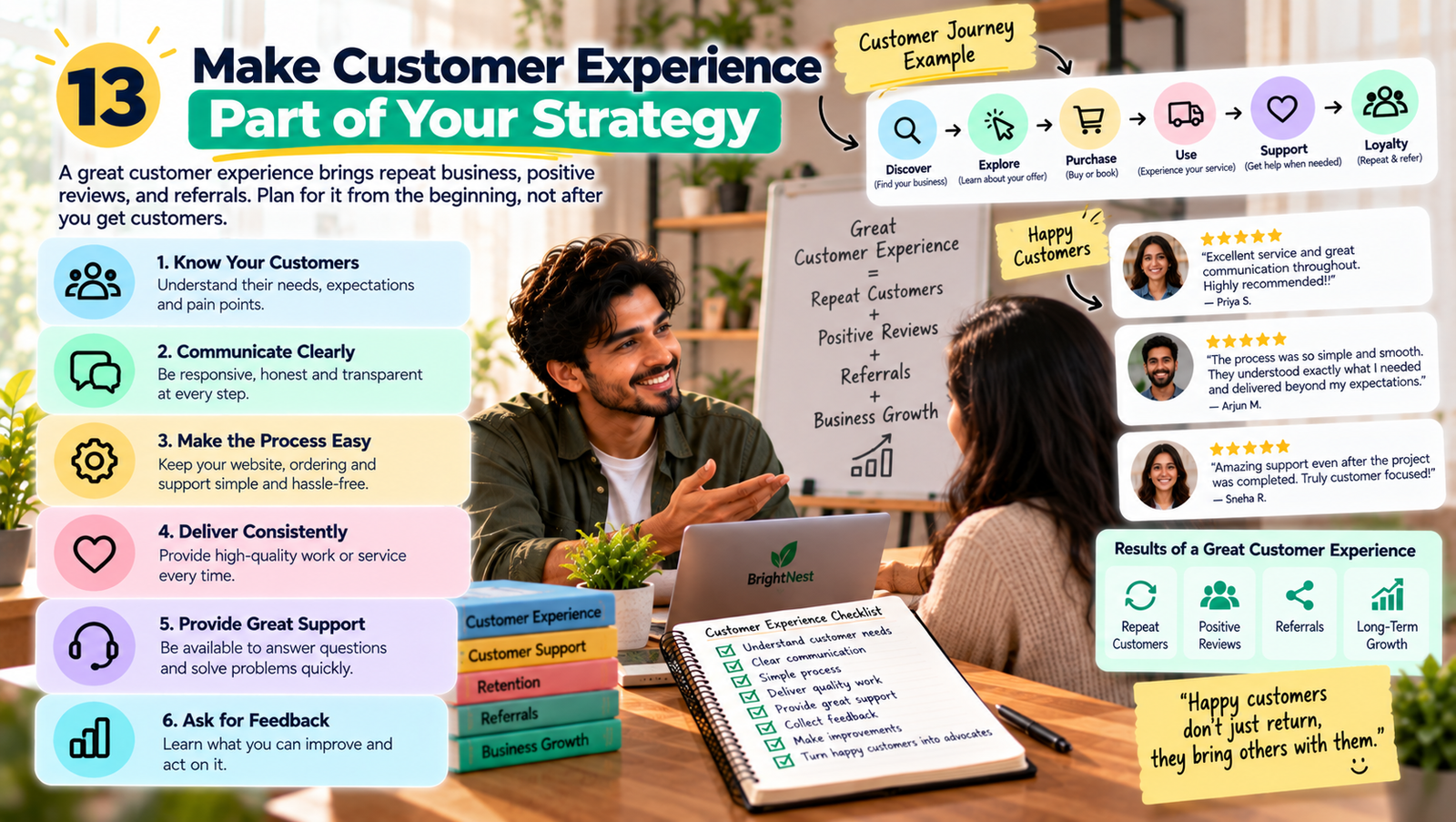
Winning a customer is only half the job. Reply promptly, set realistic deadlines, spell out what’s included, and keep clients updated on progress. If something goes wrong, communicate instead of going quiet. A smooth experience can lead to repeat business and referrals.
14. Keep Your Business Records Separate
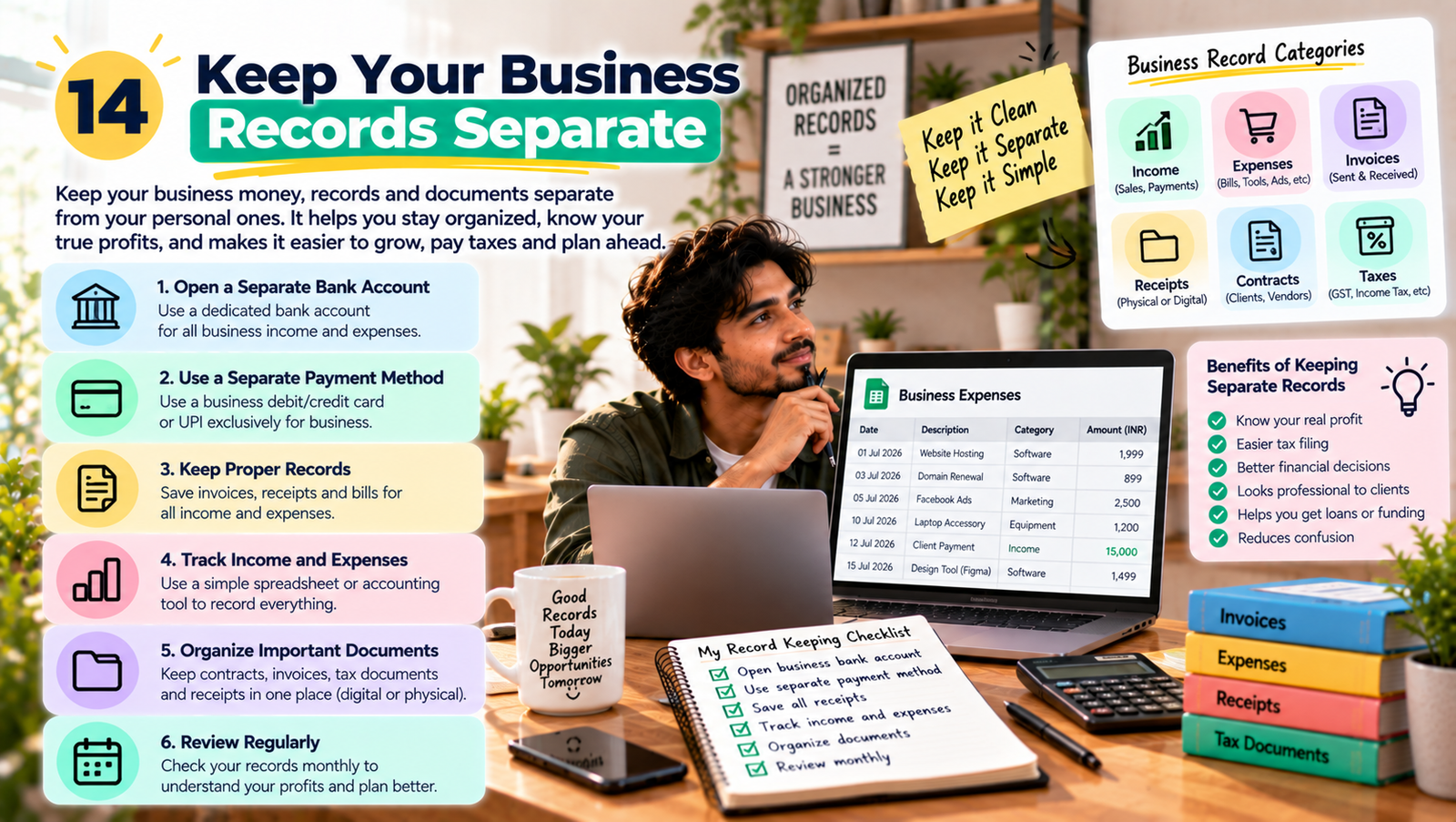
Once money starts coming in, avoid mixing it with personal spending. Track:
- Customer payments
- Business expenses
- Software costs
- Advertising spend
- Equipment purchases
- Invoices
- Refunds
- Taxes
Depending on your country, state, business type, and income, you may also face registration, tax, or licensing rules. If you’re in India, check the requirements for your specific business type before you scale up.
15. Improve the Business Using Real Data
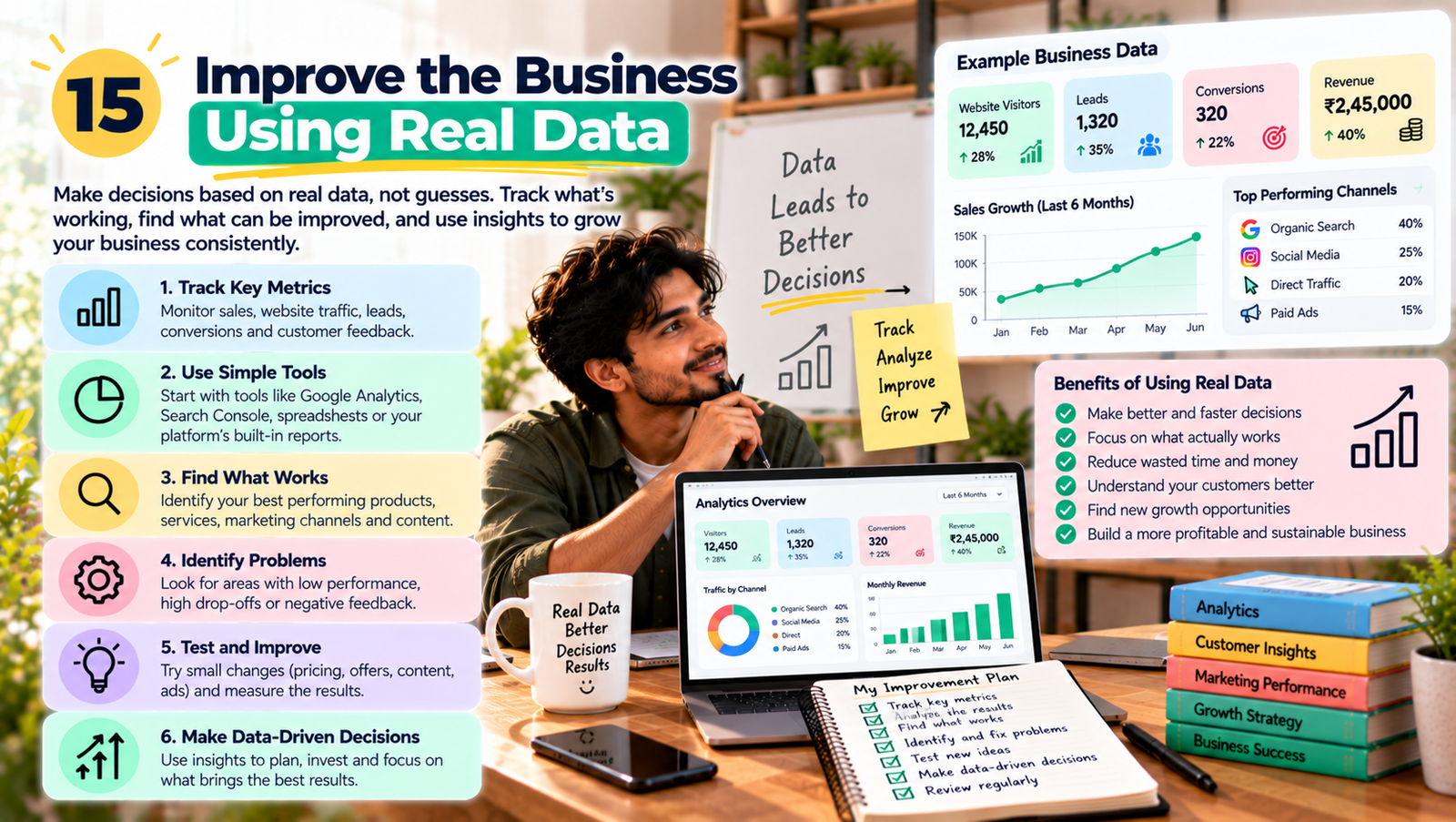
After operating for a while, review what’s actually happening:
- Which product sells best?
- Which service gets the most enquiries?
- Where do customers find you?
- Which marketing channel brings in leads?
- What does it cost to win a customer?
- Who comes back?
The answers show where to invest your time and money, so you’re not guessing.
How Much Money Do You Need to Start a Business From Home?
There’s no single figure. A freelance service might launch with equipment you already own. A product business needs money for materials, stock, packaging, shipping, and marketing.
The key is separating must-haves from nice-to-haves. A reliable laptop may be essential for a service business, but a fancy office setup on day one is not. Begin with the essentials and reinvest as revenue grows.
Home Business Ideas to Consider
The best idea depends on your skills and market. Popular options include:
Digital services: web design, SEO, graphic design, content writing, video editing, social media management
Teaching and expertise: online tutoring, coaching, consulting, skill-based courses
Product businesses: handmade products, clothing, personalized gifts, home décor, food products (where permitted)
Digital products: templates, e-books, courses, design resources, software
Don’t pick an idea just because someone says it’s profitable. Look for the overlap of three things: something you can deliver well, people who need it, and a price that keeps the business viable.
Common Mistakes to Avoid When Starting a Home Business
- Overstocking: test demand before filling your home with inventory.
- Overspending on branding: a polished logo can’t rescue an offer nobody wants.
- Waiting for a perfect website: launch a useful version and improve it over time.
- Copying competitors: study them, but build your own offer and identity.
- Ignoring feedback: early customers can reveal problems you can’t see.
- Using too many marketing channels: focus on the ones that reach your audience.
- Mixing personal and business money: clean records matter more as you grow.
A Simple 30-Day Plan for Starting a Home Business
Week 1: Choose and test
- List your skills
- Brainstorm business ideas
- Select one audience
- Talk to potential customers
- Test your offer
Week 2: Build the basics
- Choose a business name
- Set your pricing
- Create basic branding
- Prepare your workspace
- Build a simple website or landing page
Week 3: Start promoting
- Set up social profiles
- Publish helpful content
- Contact potential customers
- Ask for referrals
- Begin building a portfolio
Week 4: Learn and improve
- Review enquiries
- Check sales
- Collect customer feedback
- Refine your offer
- Cut unnecessary costs
- Plan the next month
The goal isn’t a large company in 30 days. It’s to move from idea to testing to first customers to learning.
Final Thoughts
Starting a business from home doesn’t require having every answer upfront. What counts is finding a problem worth solving, identifying the people who have it, and shaping an offer they’ll pay for.
Start with what you already know. Keep early costs low. Test with real customers. Build a simple online presence. Promote consistently. Then use what you learn to keep improving.