
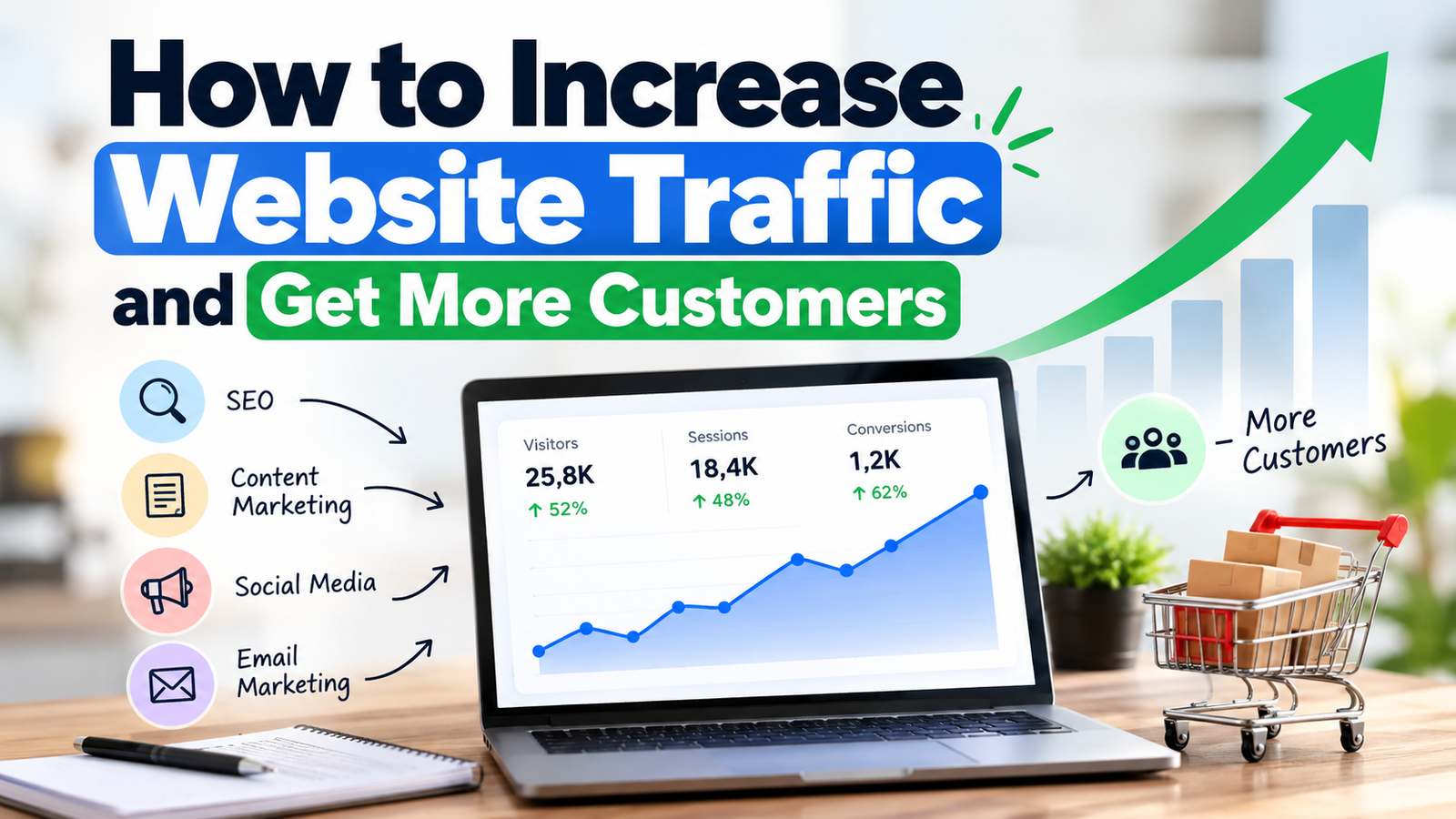
Putting a website online is the simple part. The real challenge is bringing in the right audience and persuading them to become paying customers.
If your site isn’t getting enough visits, a massive ad budget isn’t your only option. Search engines, helpful content, social platforms, referrals, and email can all send people your way.
Keep one principle in mind: traffic is only worth something when the visitors are genuinely interested in what you sell.
This guide covers practical methods to increase website traffic, strengthen your online visibility, and generate more enquiries and sales.
1. Find Out What Your Customers Are Searching For
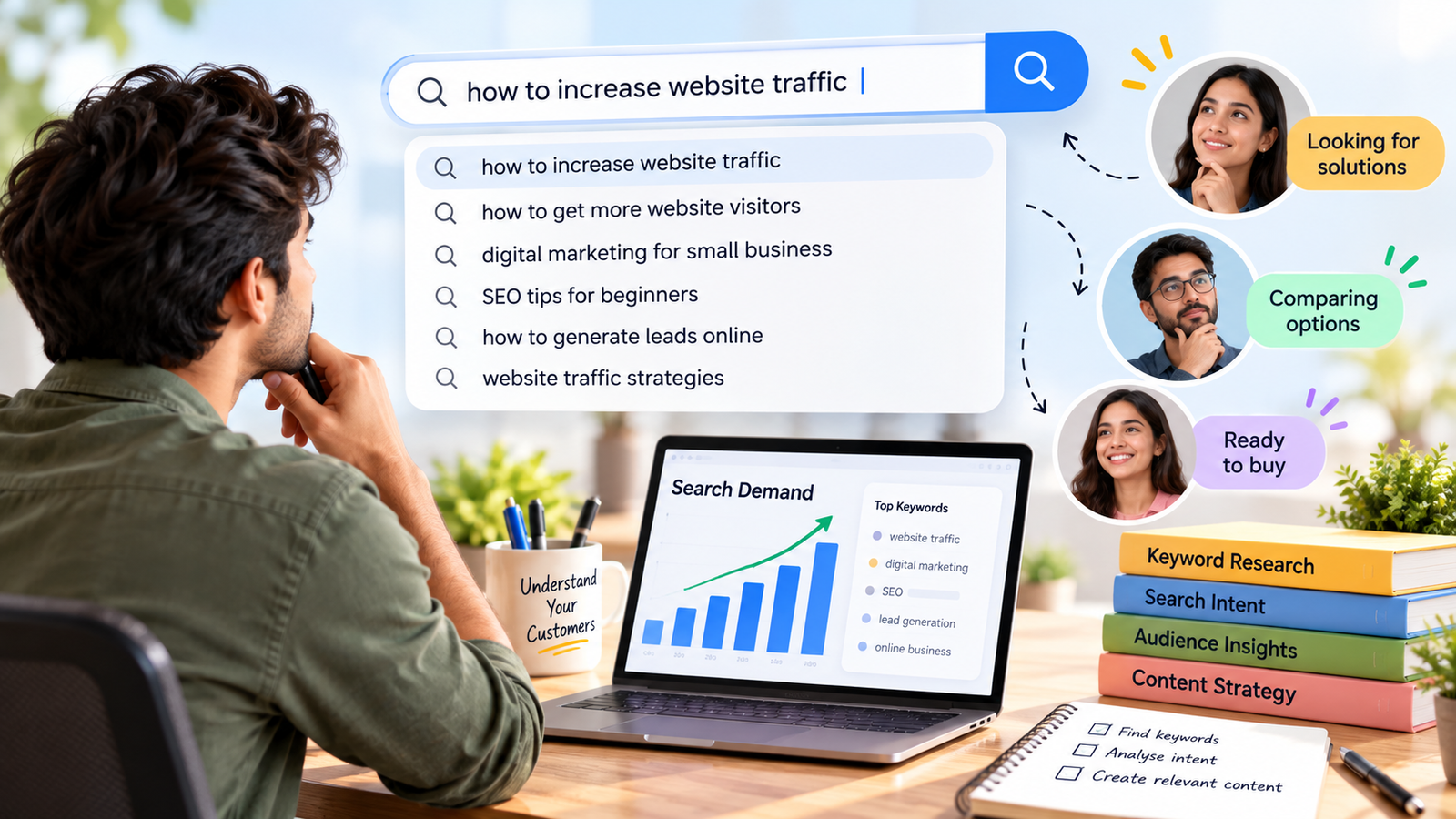
Before you write anything, put yourself in your customer’s shoes. What problem are they trying to fix? What do they ask before buying? What would they type into Google to find a business like yours?
A digital marketing company, for example, might target searches like:
- How to increase website traffic
- How to get more visitors to a website
- How to increase organic traffic
- Digital marketing for small businesses
- How to generate leads online
- How to improve website SEO
- SEO tips for small businesses
Use these ideas to shape both your service pages and your blog topics. Don’t stuff keywords into every sentence. Understand the intent behind the search and build a page that truly answers it.
2. Build Your Organic Traffic With SEO
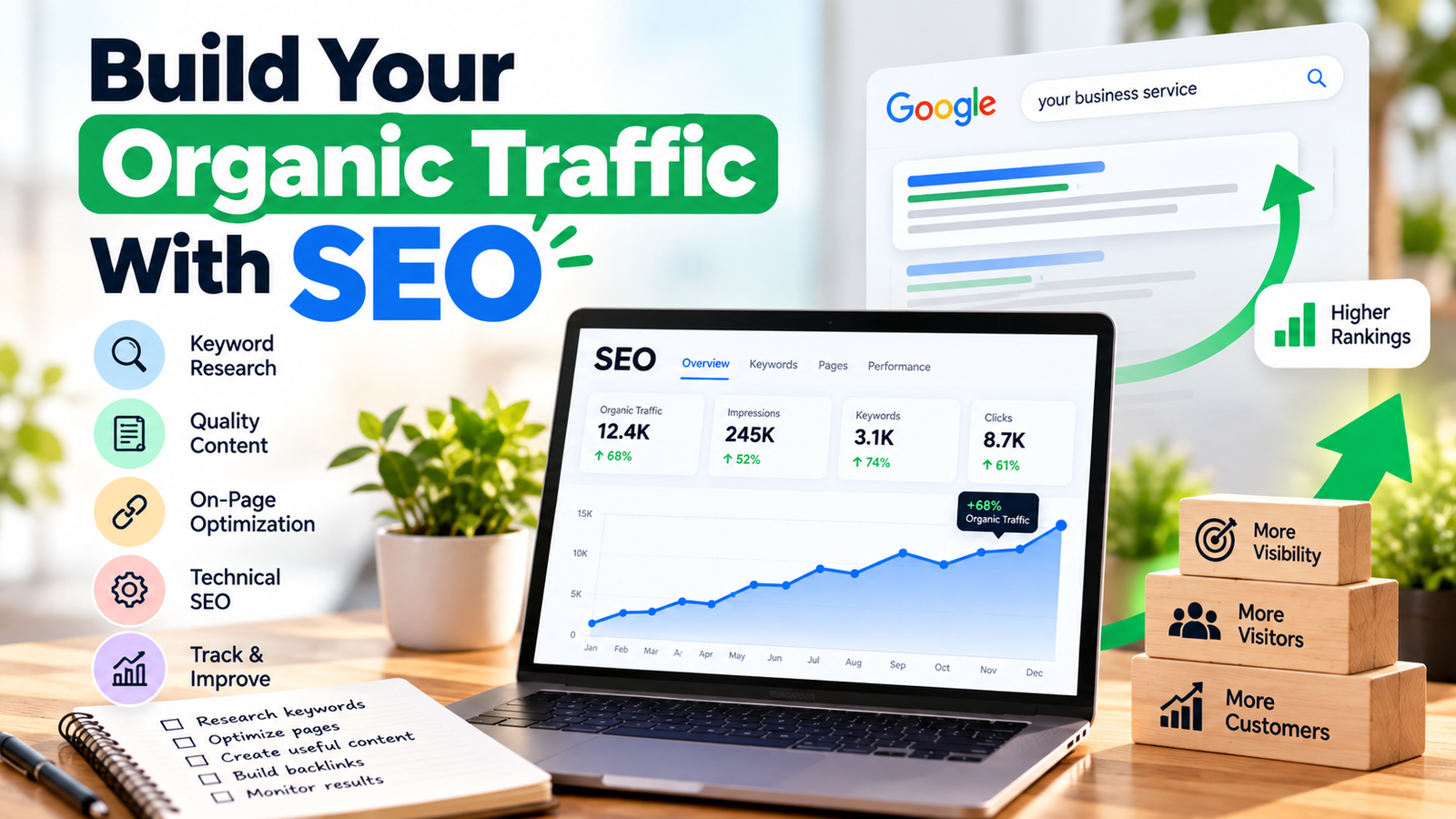
Search engine optimization helps your site show up when people look for information, products, or services in your field. Begin with the on-page basics. Each important page should have:
- A descriptive title tag
- One clear main heading
- Relevant search terms used naturally
- A compelling meta description
- A short, readable URL
- Internal links to related pages
- Compressed, optimized images
- Helpful, original content
Compare these two URLs:
- Clear:
yourwebsite.com/how-to-increase-website-traffic - Unclear:
yourwebsite.com/blog/post?id=458
The first tells both visitors and search engines what the page covers.
3. Create Content Around Real Customer Questions
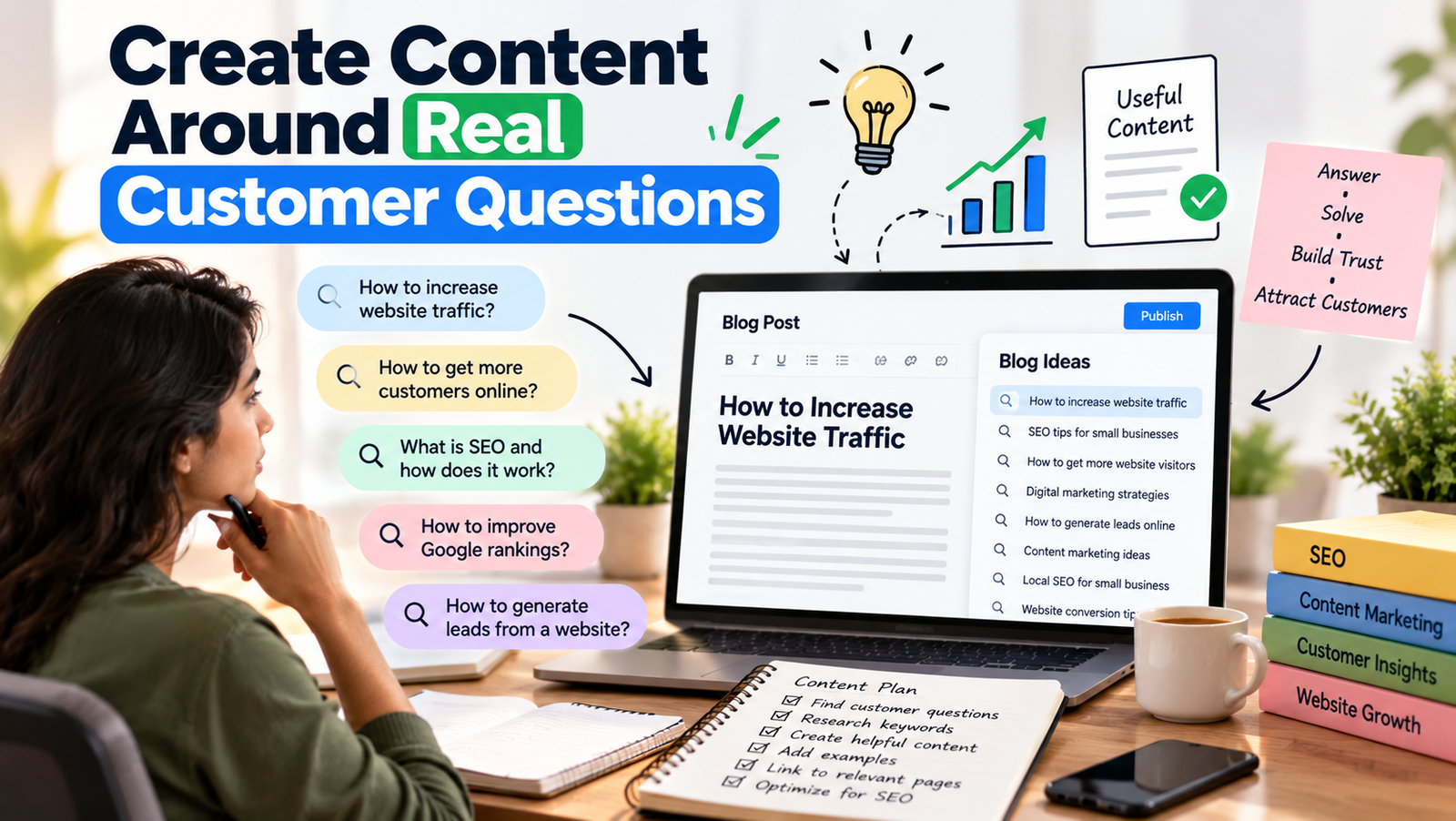
One of the easiest ways to earn organic visits is to answer questions your audience already asks. Don’t publish a post just to fill the blog calendar. Start from an actual problem:
- “How can I get more people to visit my website?” Write a detailed guide to traffic-generation methods.
- “Why isn’t my website showing on Google?” Explain common SEO and indexing issues.
- “How can a small business find customers online?” Cover SEO, social media, content, ads, and conversion tactics in one resource.
Every article then has a clear purpose.
4. Don’t Ignore Long-Tail Keywords
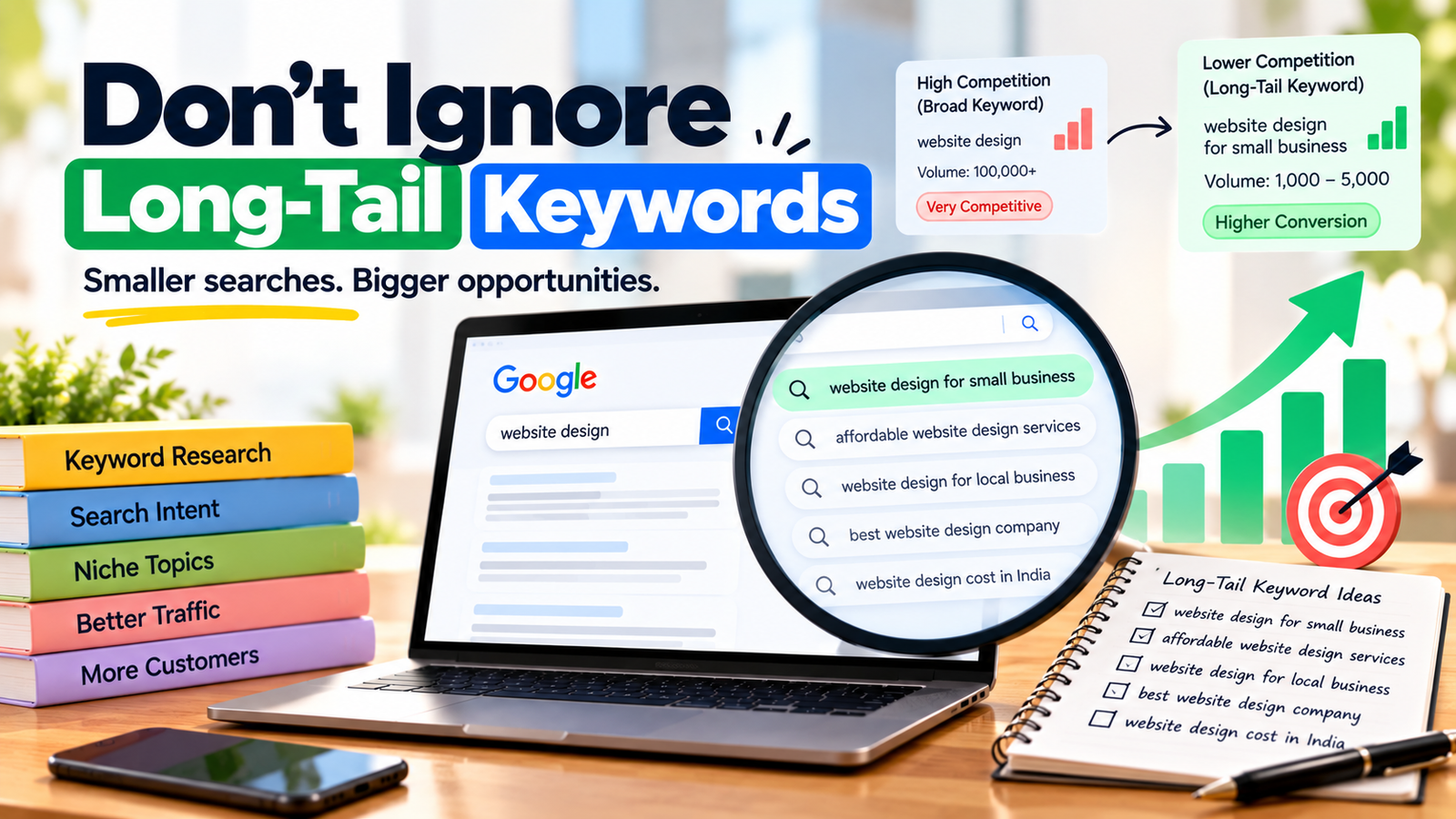
Broad terms such as “SEO” are fiercely competitive. More specific phrases are easier to win and attract more focused visitors, for example:
- “SEO strategies for small business websites”
- “how to increase organic traffic for a new website”
Think about the exact words your customers use to describe their problem. The closer your page matches their question, the more useful it becomes.
5. Improve Your Existing Website Pages
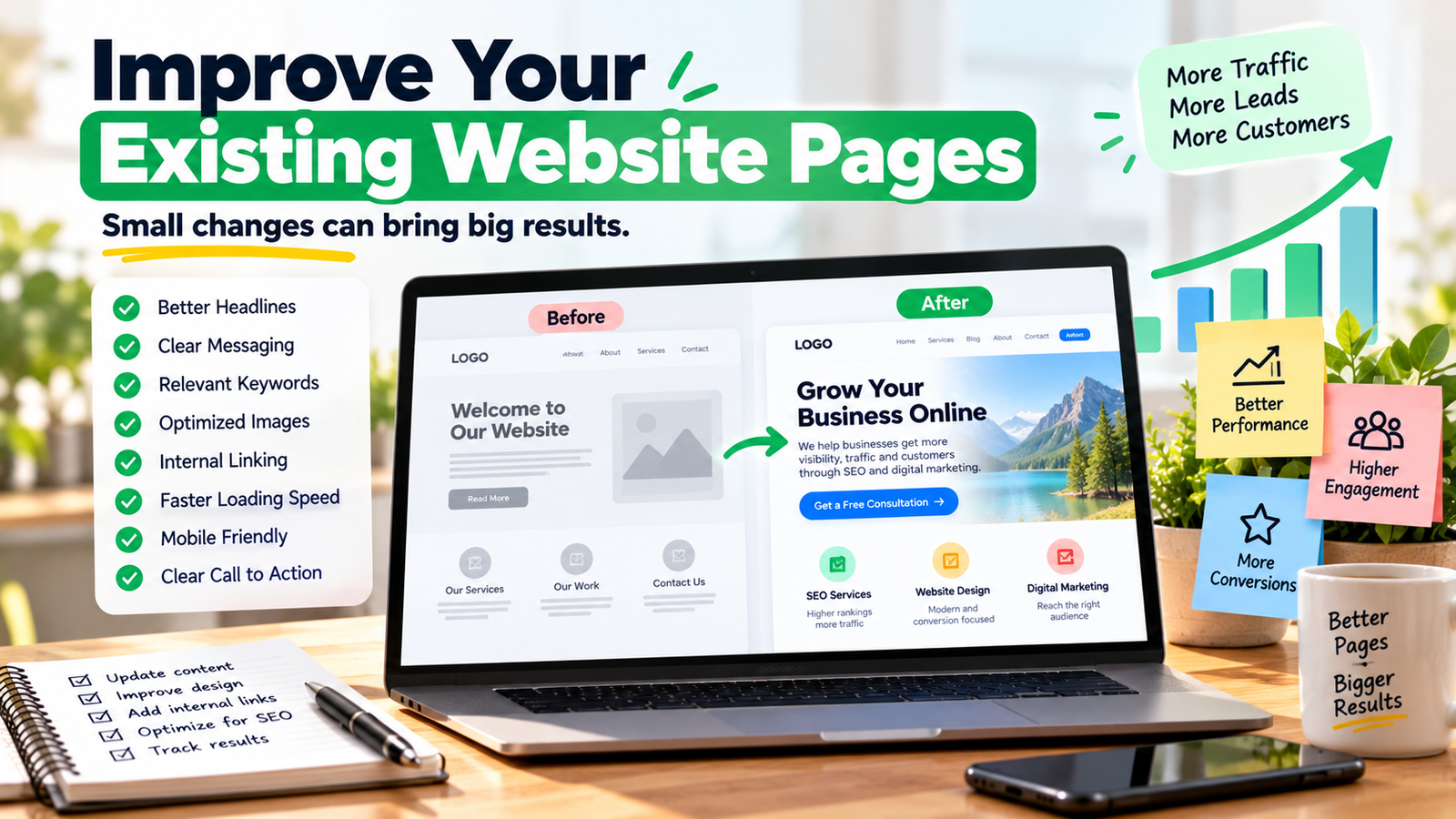
Sometimes the quickest gain comes from fixing existing pages rather than writing new ones. Review each key page and ask:
- Is the headline clear?
- Does the page explain the offer quickly?
- Is the text easy to scan?
- Are keywords used naturally?
- Are there helpful internal links?
- Does it work well on mobile?
- Is the next step obvious?
- Are the images optimized?
- Does it load fast?
Small upgrades across your main pages can noticeably improve both user experience and conversions.
6. Create Dedicated Pages for Your Services
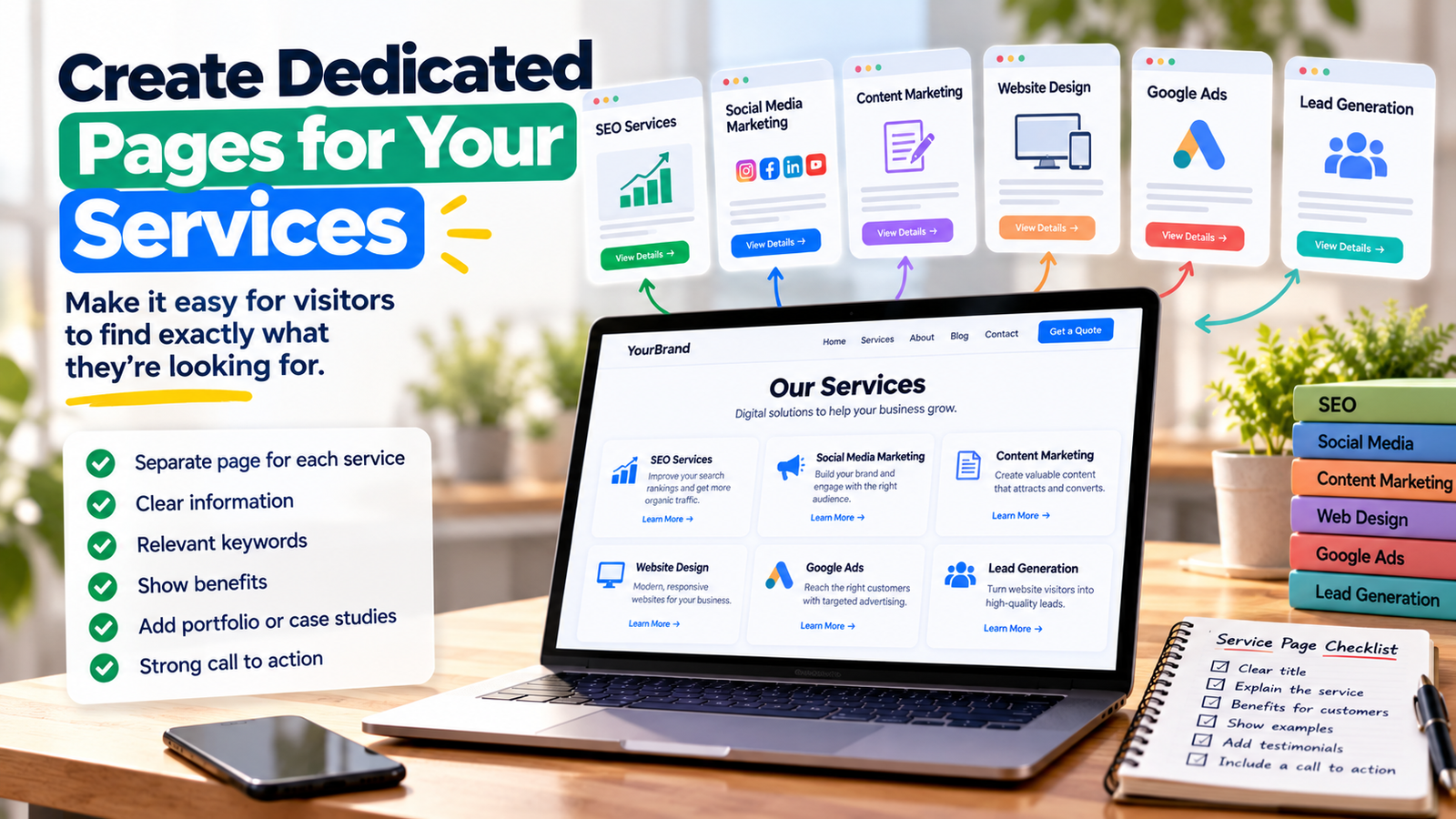
If you offer several services, don’t squeeze them all onto the homepage. A freelance digital marketer might create separate pages for:
- SEO services
- Social media marketing
- Content marketing
- Google Ads management
- Website design
- Lead generation
Dedicated pages let visitors find exactly what they need and give you more chances to rank for specific searches. Someone looking for SEO help shouldn’t have to dig through your homepage. Send them straight to a page built for that need.
7. Use Your Blog to Guide Visitors Toward Your Services
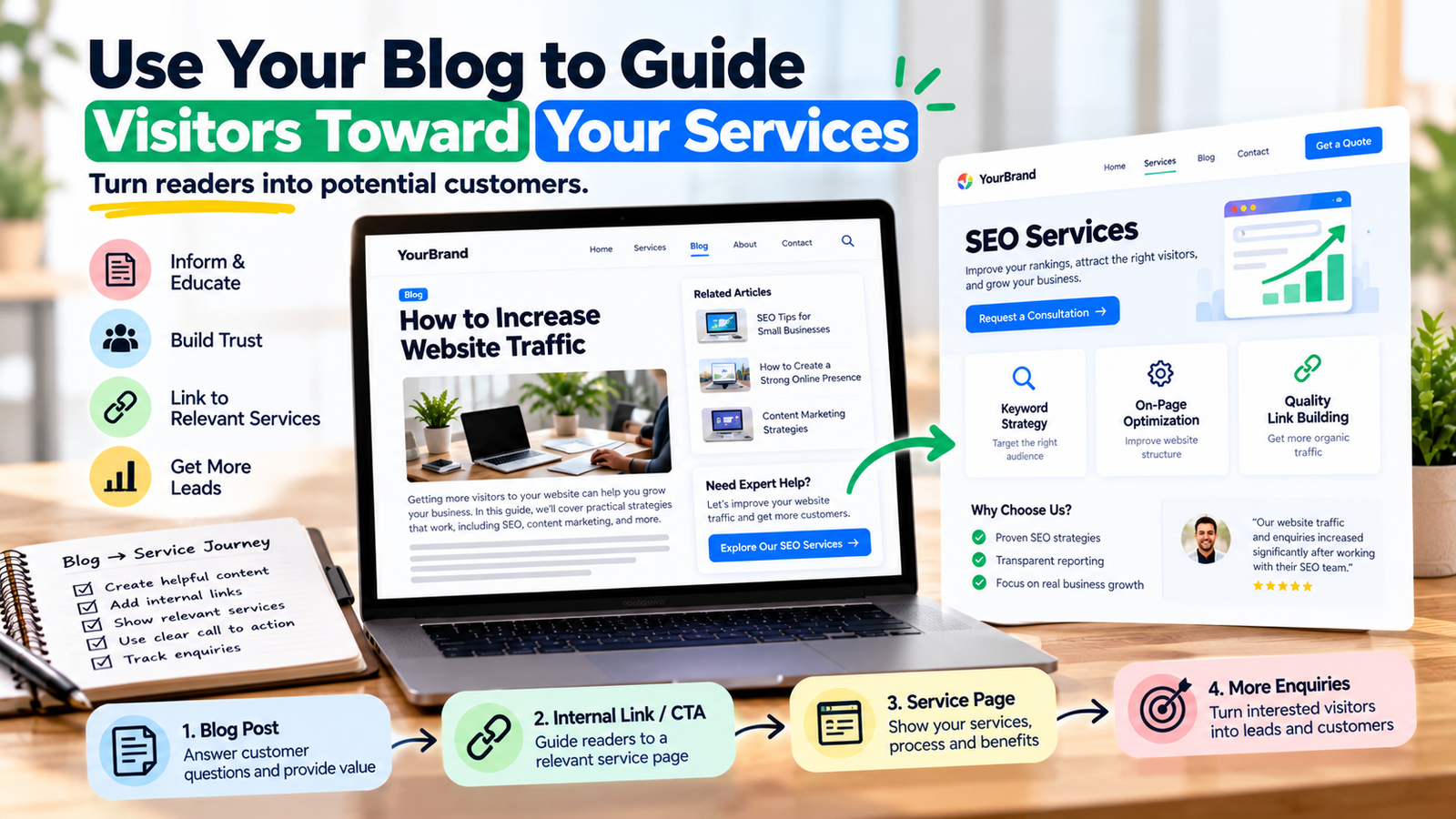
Your blog shouldn’t sit apart from the rest of the site. Imagine a reader lands on your traffic guide and realizes they need expert help. A contextual internal link, such as “Need help improving your search visibility? Explore our SEO services,” gives them a natural next step. The reader gets more information, and your site gains a clear path from learning to enquiry.
8. Turn One Blog Post Into Multiple Pieces of Content
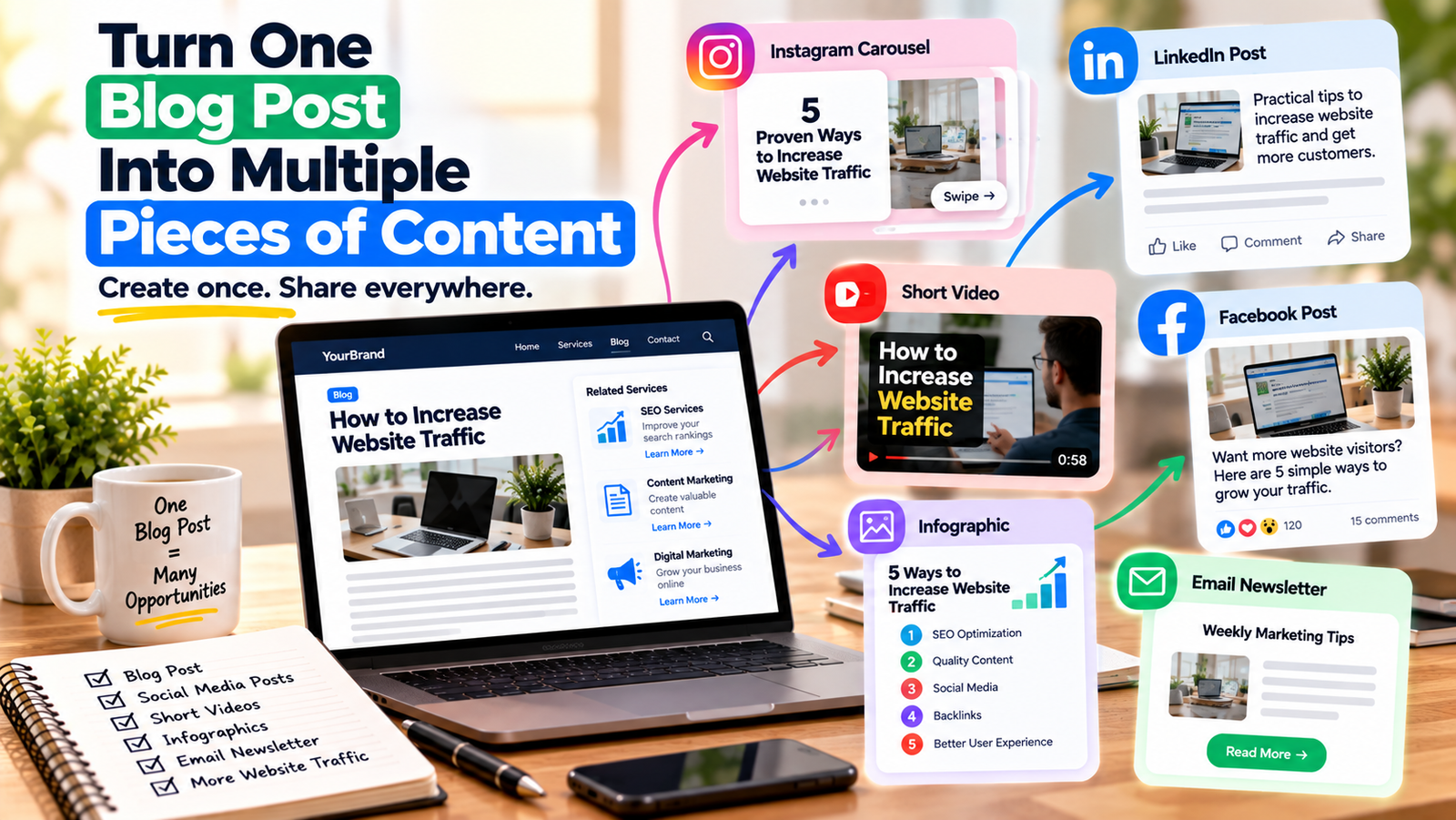
A well-researched article takes effort, so get more than one use out of it. A single post can become:
- A LinkedIn post on SEO
- An Instagram carousel on website traffic
- A short explainer video on organic traffic
- A Facebook post with three quick tips
- An infographic on turning visitors into leads
- A brief email newsletter
Each format introduces new people to your topic and sends interested ones back to your site, extending the life of your content.
9. Earn Links From Other Relevant Websites
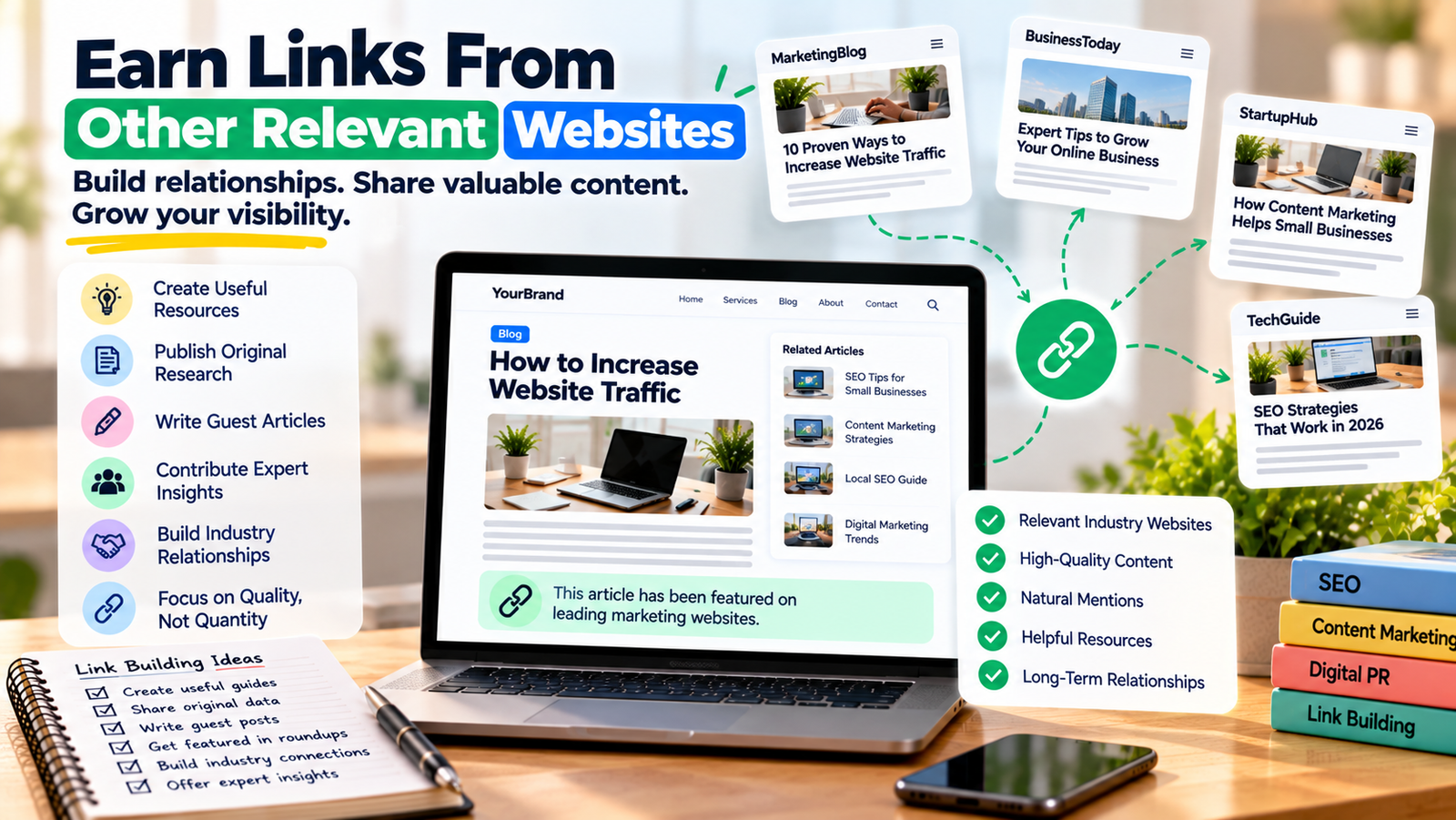
Links from other sites can bring referral visitors and support your search visibility. Treat link building as quality over quantity: a few mentions from respected sites in your industry beat hundreds of unrelated ones. Ways to earn them include:
- Original research
- Useful resources
- Expert contributions
- Guest articles
- Industry partnerships
- In-depth guides
- Data-driven content
Create something other sites have a real reason to cite.
10. Give Visitors a Clear Next Step
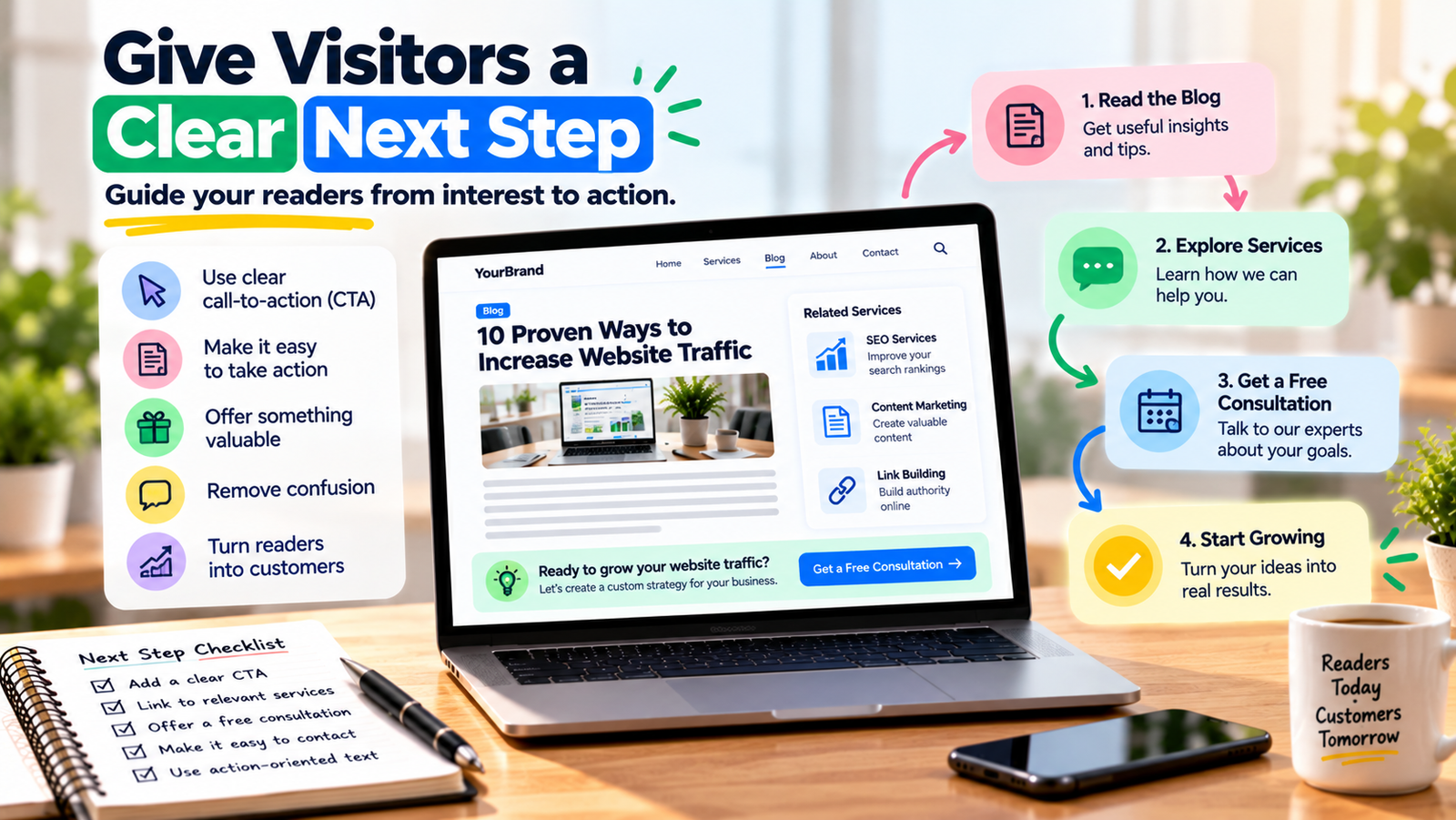
Attracting a visitor is only the first step. Decide what action you want them to take and make it unmistakable. Rather than relying on a small “Contact” link in the menu, use clear calls to action such as:
- Request a Quote
- Book a Consultation
- Discuss Your Project
- Get a Free Website Audit
Choose the CTA that suits your business. No one should have to guess how to reach you.
11. Offer Something Useful in Exchange for a Lead
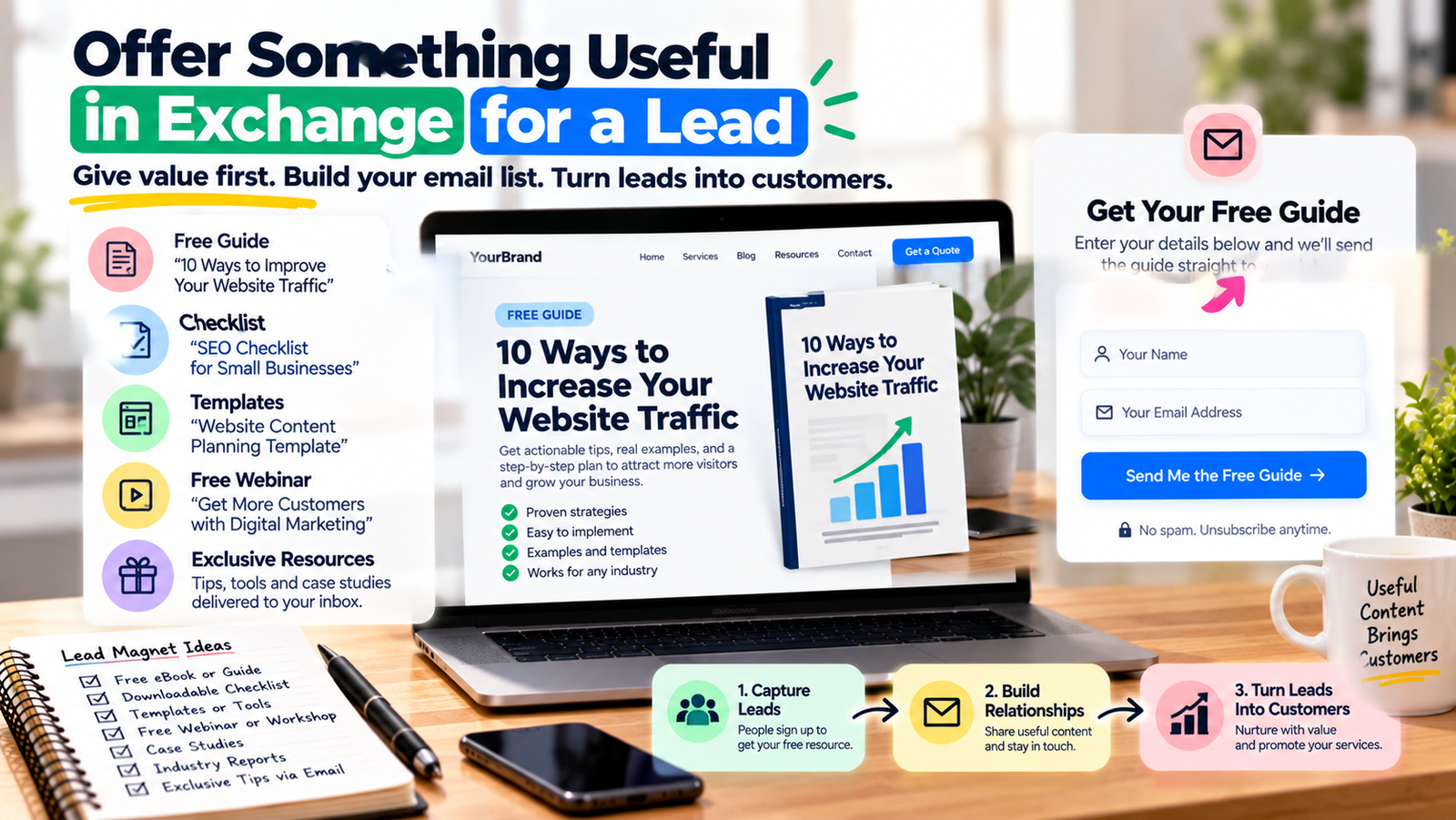
Many visitors are still researching and aren’t ready to buy. A valuable freebie gives them a reason to stay in touch. Options include:
- An SEO checklist
- A website audit
- A marketing planning template
- A social media calendar
- A downloadable guide
- A website improvement checklist
- A free consultation
This works especially well for service businesses, since it lets you show your expertise before asking for a sale.
.
12. Stay Connected With Potential Customers
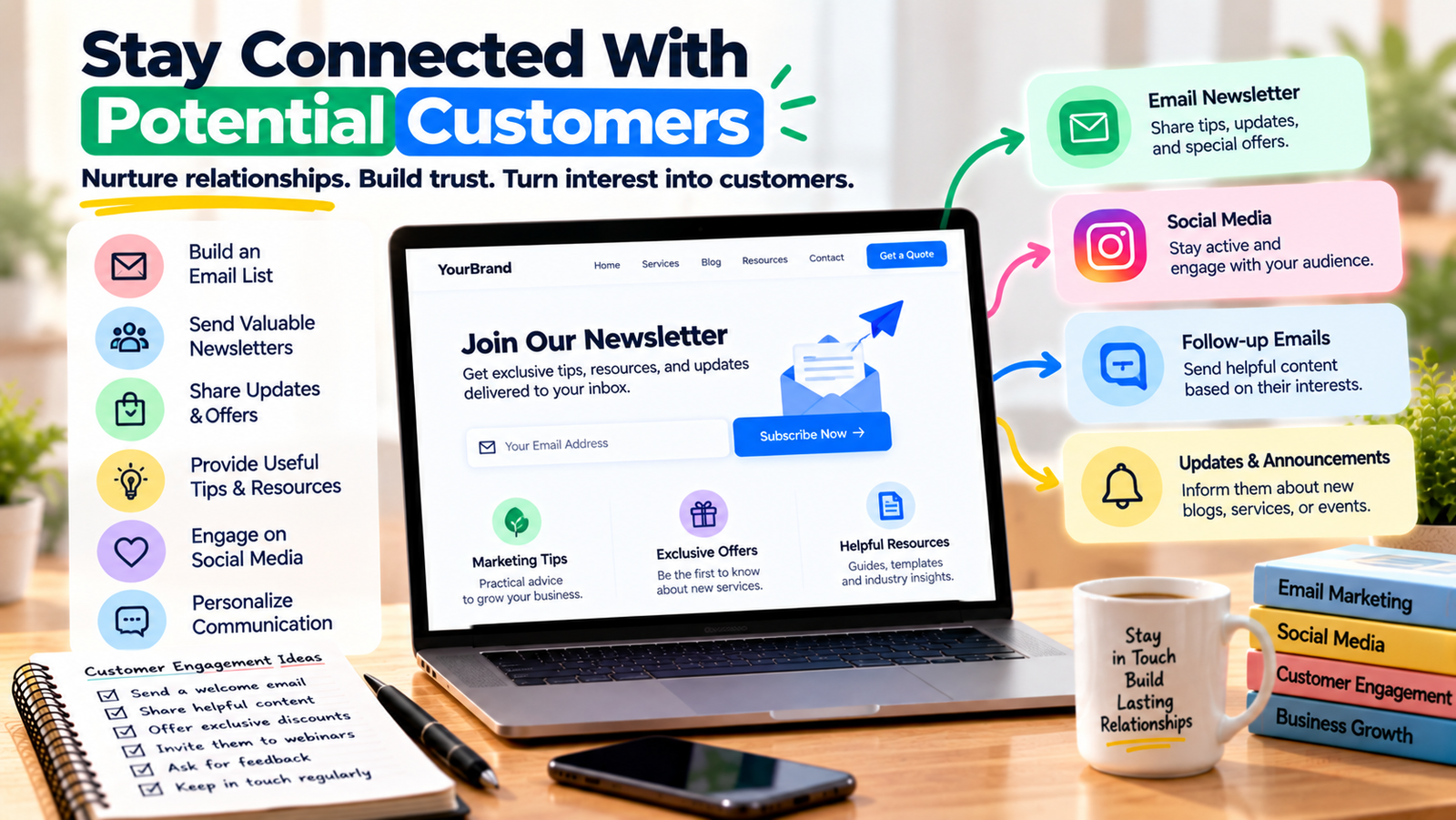
A visitor might find you today but not need your service for several weeks. Email lets you stay visible to people who chose to subscribe. You can share:
- Marketing tips
- New blog posts
- Case studies
- Practical guides
- Industry updates
- New services
- Special offers
Focus on real value rather than flooding inboxes with promotions.
13. Use Paid Traffic When It Makes Sense
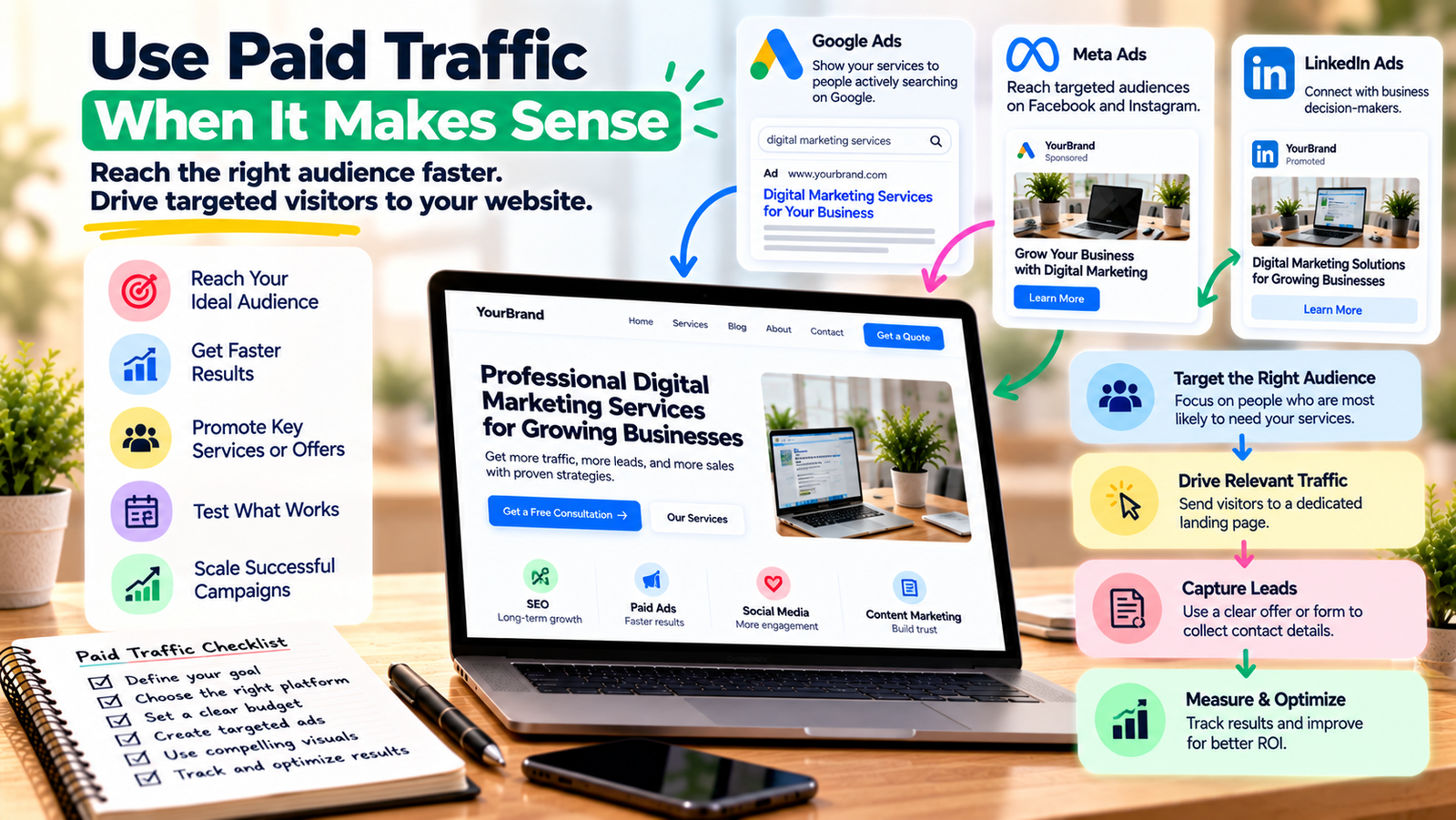
Organic rankings take time, especially for competitive keywords. Paid advertising can fill the gap. Depending on where your audience spends time, consider:
- Google Ads
- Meta Ads
- LinkedIn Ads
- YouTube Ads
Avoid sending paid visitors to a generic homepage. If someone searches for a specific service, send them to a landing page that explains what you offer, why it matters, what sets you apart, and what to do next.
14. Refresh Older Articles
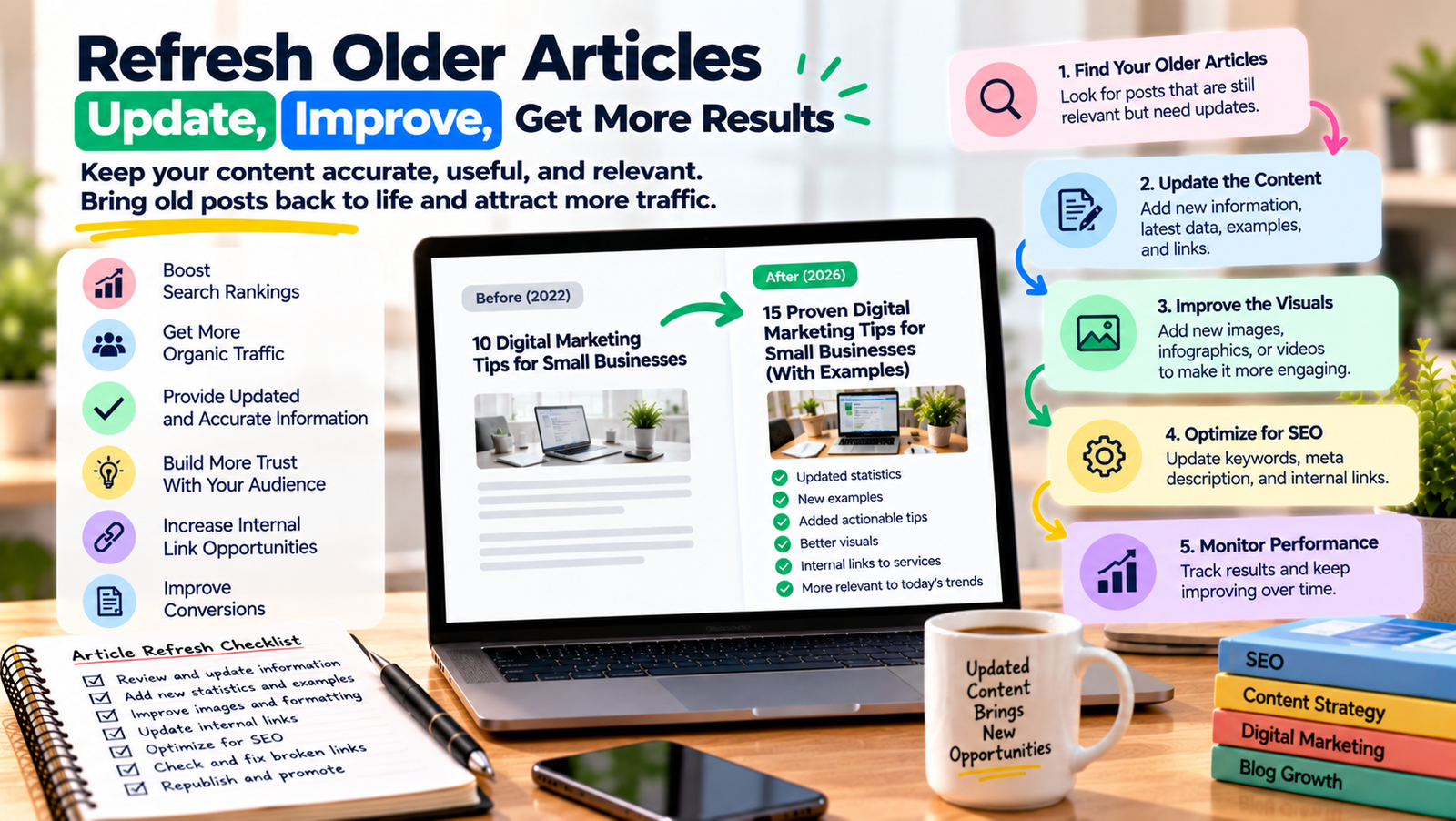
Old posts still have value. Information, search behavior, and your own services all change, so review past content regularly. Check for:
- Outdated facts
- Broken links
- Missing sections
- Weak introductions
- Stale examples
- New keyword opportunities
- Missing internal links
- Unclear calls to action
If an article already gets impressions or clicks, refreshing it is often more effective than writing a new one from scratch.
15. Measure More Than Visitor Numbers
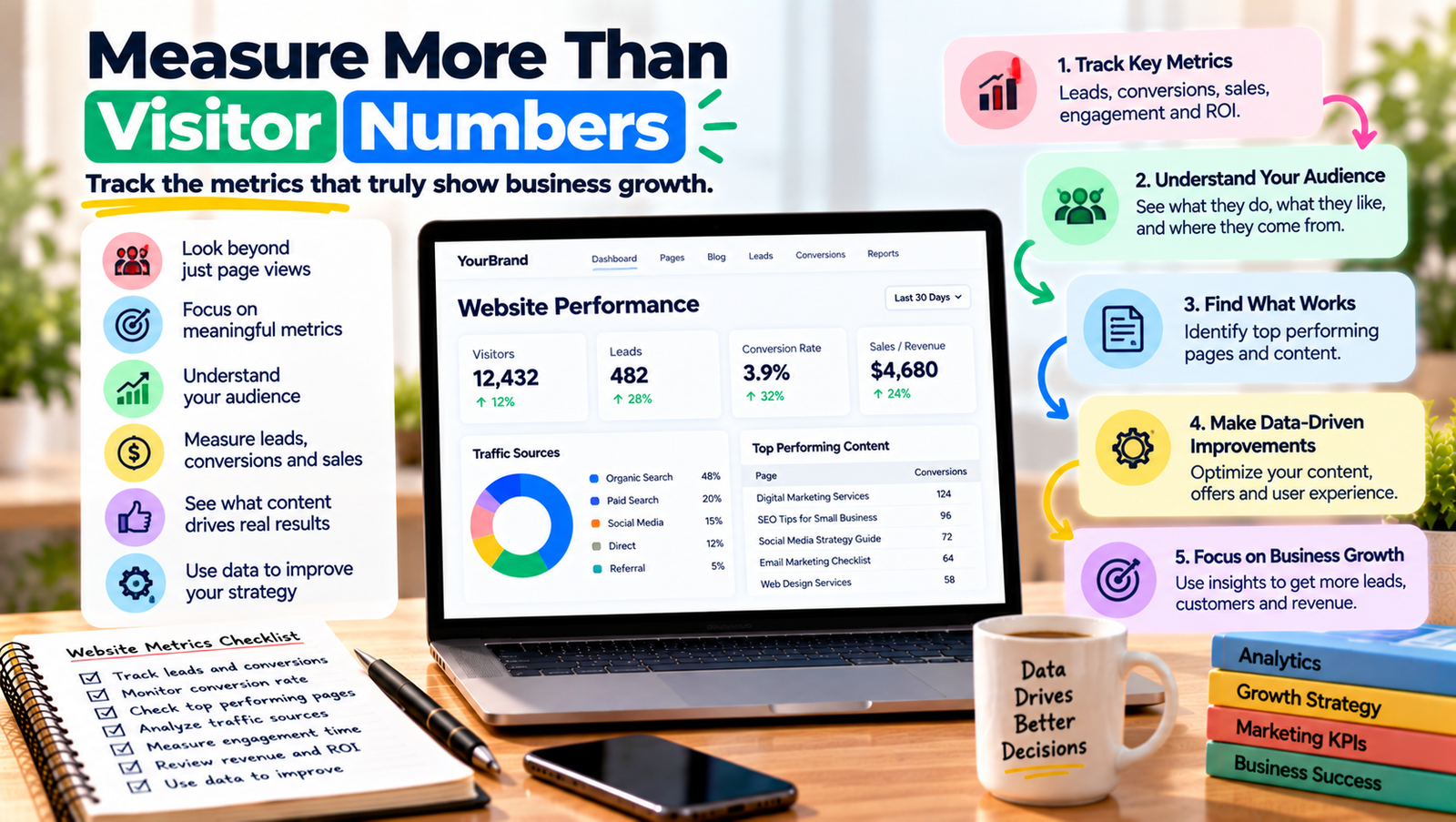
A traffic report can look great while enquiries stay low. Measure what visitors actually do, including:
- Organic visitors
- Search impressions
- Click-through rate
- Top landing pages
- Search queries
- Referral sources
- Form submissions
- Conversion rate
- Leads generated
- Cost per lead
Consider two pages. One draws 500 visitors and produces 15 enquiries. The other draws 5,000 visitors and produces only two. The second page has more traffic, but the first creates more business. The goal isn’t just more traffic. It’s more relevant traffic that leads to action.
How Website Traffic Becomes Leads
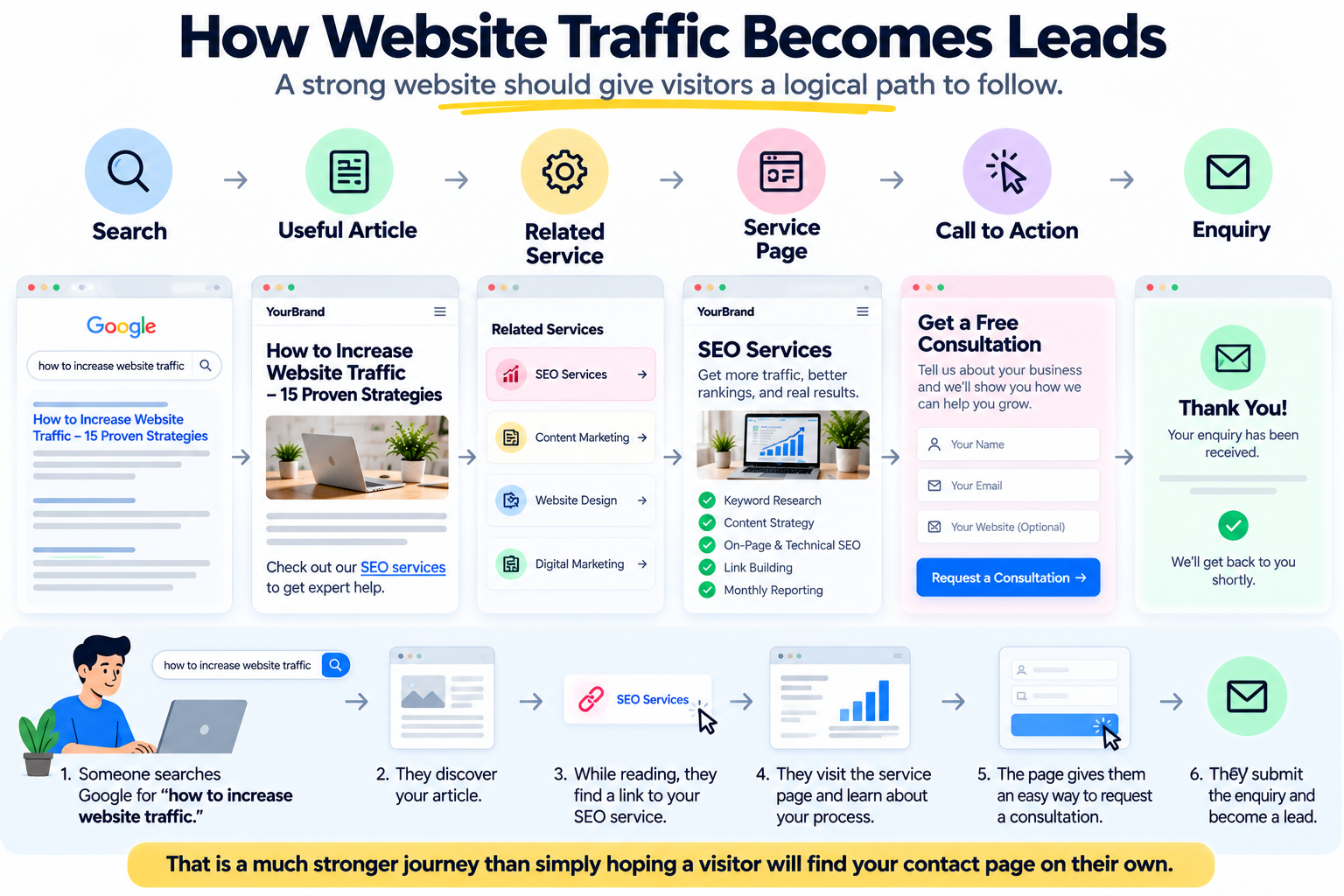
A good website guides visitors along a logical path:
Search → Helpful article → Related service → Service page → Call to action → Enquiry
Picture someone searching “how to increase website traffic.” They find your article, spot a link to your SEO service, read about your process on the service page, and then book a consultation through an easy form. That journey is far stronger than hoping visitors will locate your contact page by themselves.
There’s no fixed timeline for SEO. Results depend on competition, site history, content quality, technical health, backlinks, search demand, and how consistently you publish and improve content.
Some pages gain impressions fairly quickly, while competitive keywords can take much longer. Rather than expecting an overnight jump, build a site that gets better month after month:
- Research your audience
- Publish useful content
- Optimize key pages
- Strengthen internal linking
- Earn relevant mentions
- Review your analytics
- Use the data to decide what to improve next
Frequently Asked Questions
What is the fastest way to increase website traffic?
Paid ads and social promotion can bring visitors quickly, while SEO and content usually take longer but build lasting results.
How can I increase website traffic for free?
Focus on SEO, helpful blog content, social media, email, guest posts, and referrals.
Is more traffic always better?
No. Relevant visitors who take action are worth more than a large number of people who leave right away.
Final Thoughts
There’s no single secret to growing website traffic. The real approach is building several dependable sources of visitors and giving each one a reason to become a customer.
SEO helps people find you. Useful content answers their questions. Social media introduces your brand to fresh audiences. Relevant websites send referral visitors. Email keeps you in front of interested prospects. A well-structured site converts that attention into enquiries.
If your website isn’t producing enough customers, look beyond traffic numbers. Examine the whole journey, from the search that brings someone in, to the page they land on, to the action they take next.
Ready to attract more customers through your website? Get in touch to discuss your SEO and digital marketing strategy.