
Marketing · 7 min read · Muhammed Hashim
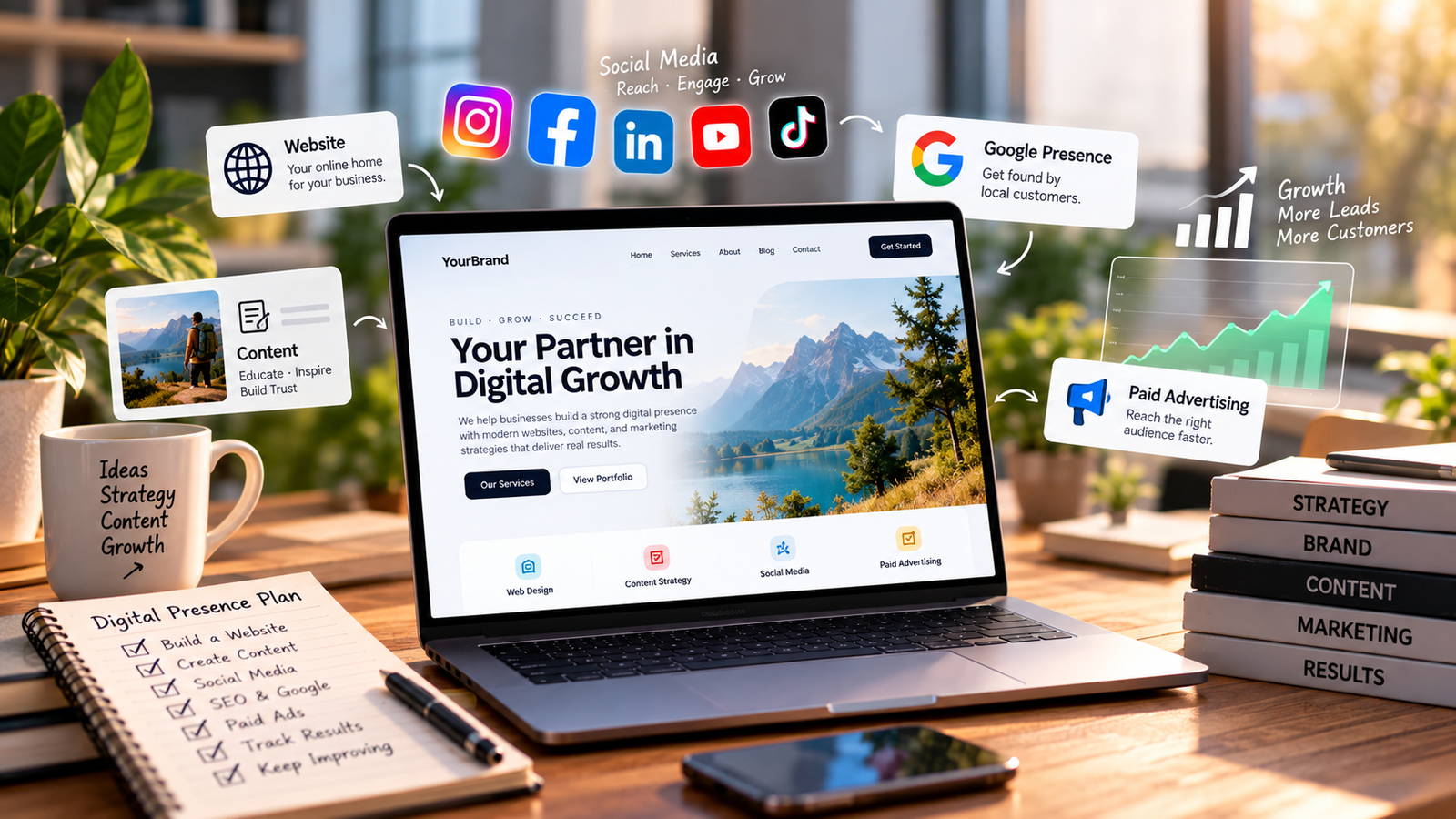
Building a strong digital presence is no longer optional for most businesses. Whether you run a small local business, a growing startup, or an established company, customers often discover and research businesses online before making a decision.
Your website, social media profiles, Google presence, content, and online reputation all contribute to how people perceive your brand.
The good news is that you don’t need to be everywhere or spend a huge amount of money to get started.
A clear strategy, consistent branding, useful content, and regular measurement can help you build a digital presence that supports long-term business growth.
1. Start With a Professional Website
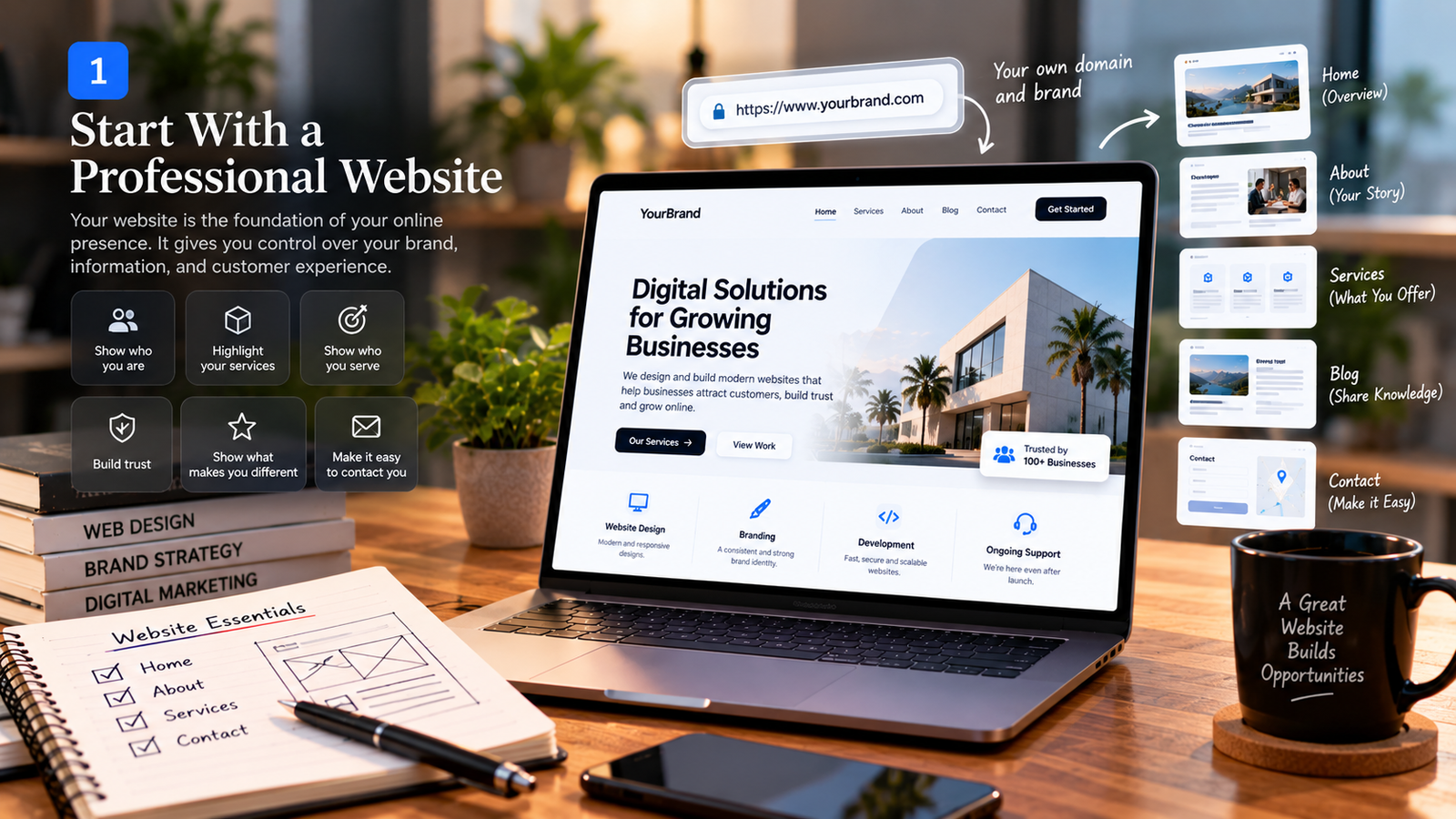
Your website can serve as the foundation of your business’s digital presence.
Social media can introduce your brand to new people, but your website gives you a dedicated space where you control the information, design, messaging, and overall customer experience.
Your website should quickly answer a few important questions:
- What does your business do?
- What products or services do you offer?
- Who are your customers?
- What makes your business different?
- How can someone contact you?
Keep the layout clean and make important information easy to access.
You don’t need to launch with a huge website. A simple structure containing Home, About, Services, and Contact can be enough when you’re starting out.
As your business develops, you can add additional pages, resources, landing pages, or an online store.
2. Make Your Brand Consistent
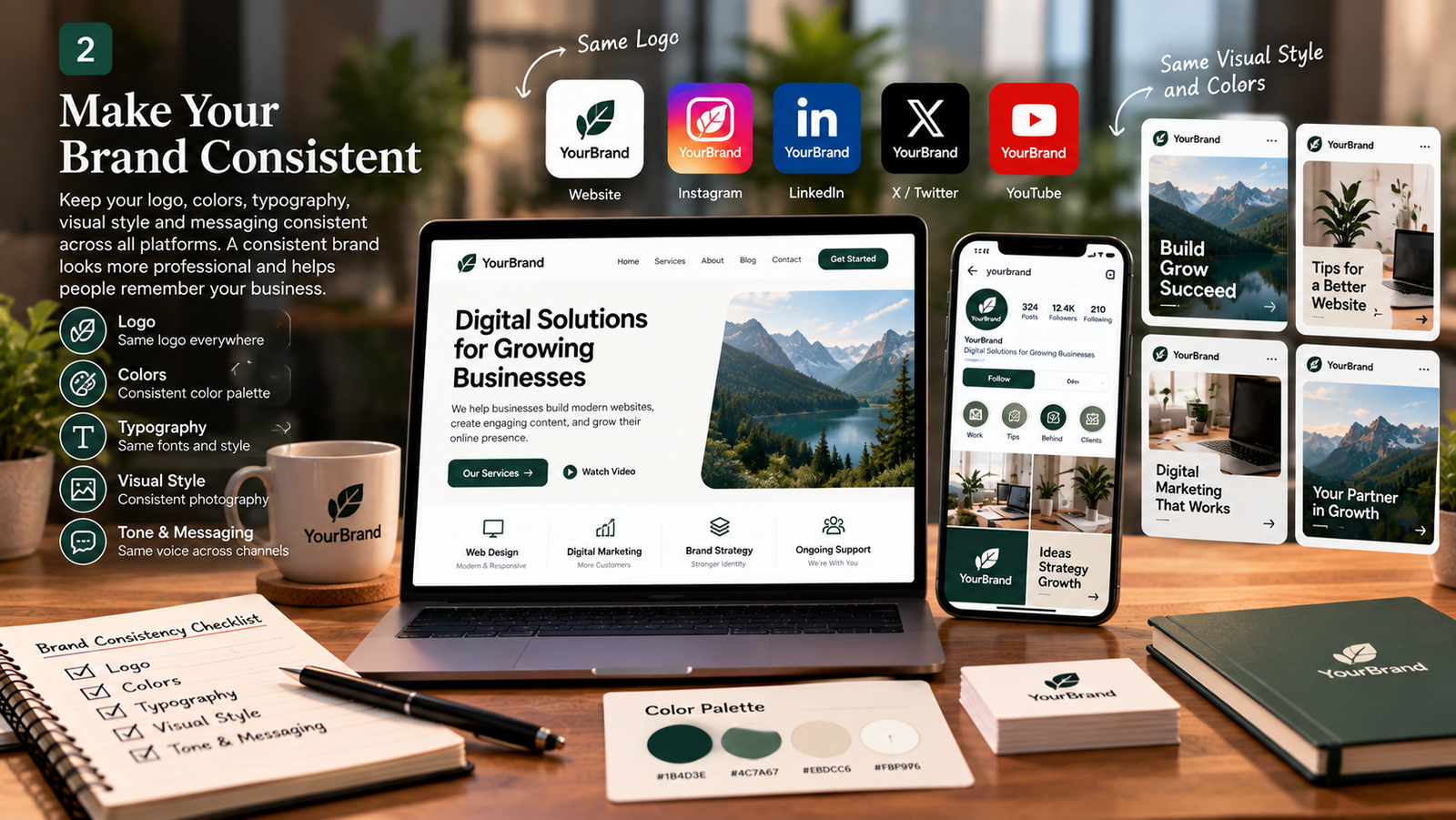
Your customers should be able to recognize your business regardless of where they encounter it online.
Your website, social media accounts, advertisements, emails, and other digital channels should have a recognizable visual and communication style.
Pay attention to elements such as:
- Logo
- Brand colors
- Fonts
- Images
- Graphic style
- Tone of communication
- Overall visual identity
When these elements work together, your brand becomes easier to remember and appears more established.
Consistency also creates a more reliable experience for customers as they move between different platforms.
3. Create Social Media Profiles
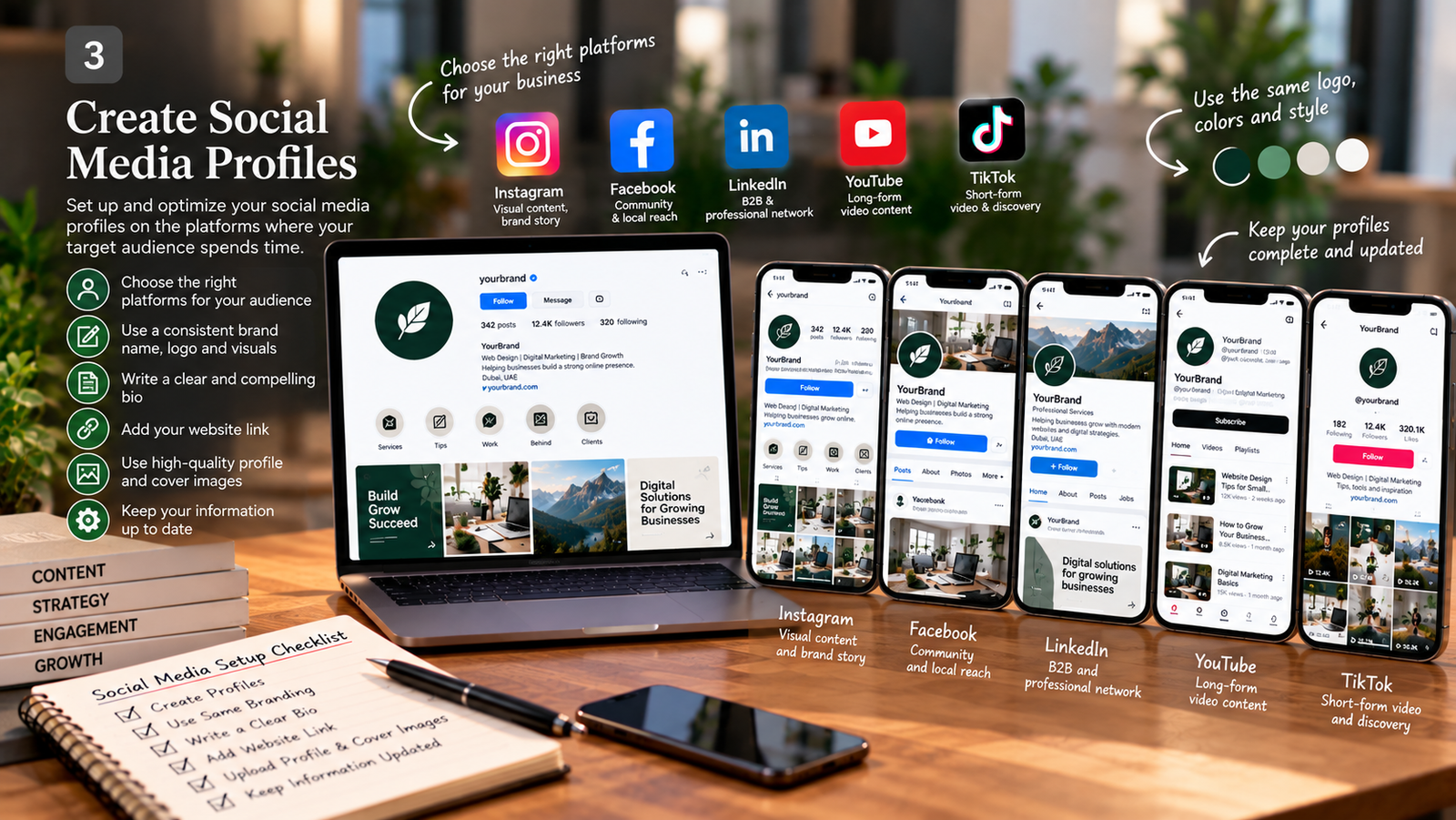
Being active on every social network isn’t necessary.
Instead, identify where your potential customers spend their time and concentrate your efforts there.
Different platforms can serve different purposes:
Instagram — Useful for visual brands, creators, lifestyle businesses, and product-based companies.
Facebook — Helpful for communities, local businesses, and reaching a broad consumer audience.
LinkedIn — Particularly valuable for B2B companies, professionals, consultants, and personal brands.
TikTok — Suitable for short-form videos, entertainment, educational content, and discovery.
Start with one or two platforms that match your audience.
It is usually better to maintain a few profiles properly than to create several accounts that rarely receive new content.
4. Create Content That Helps People
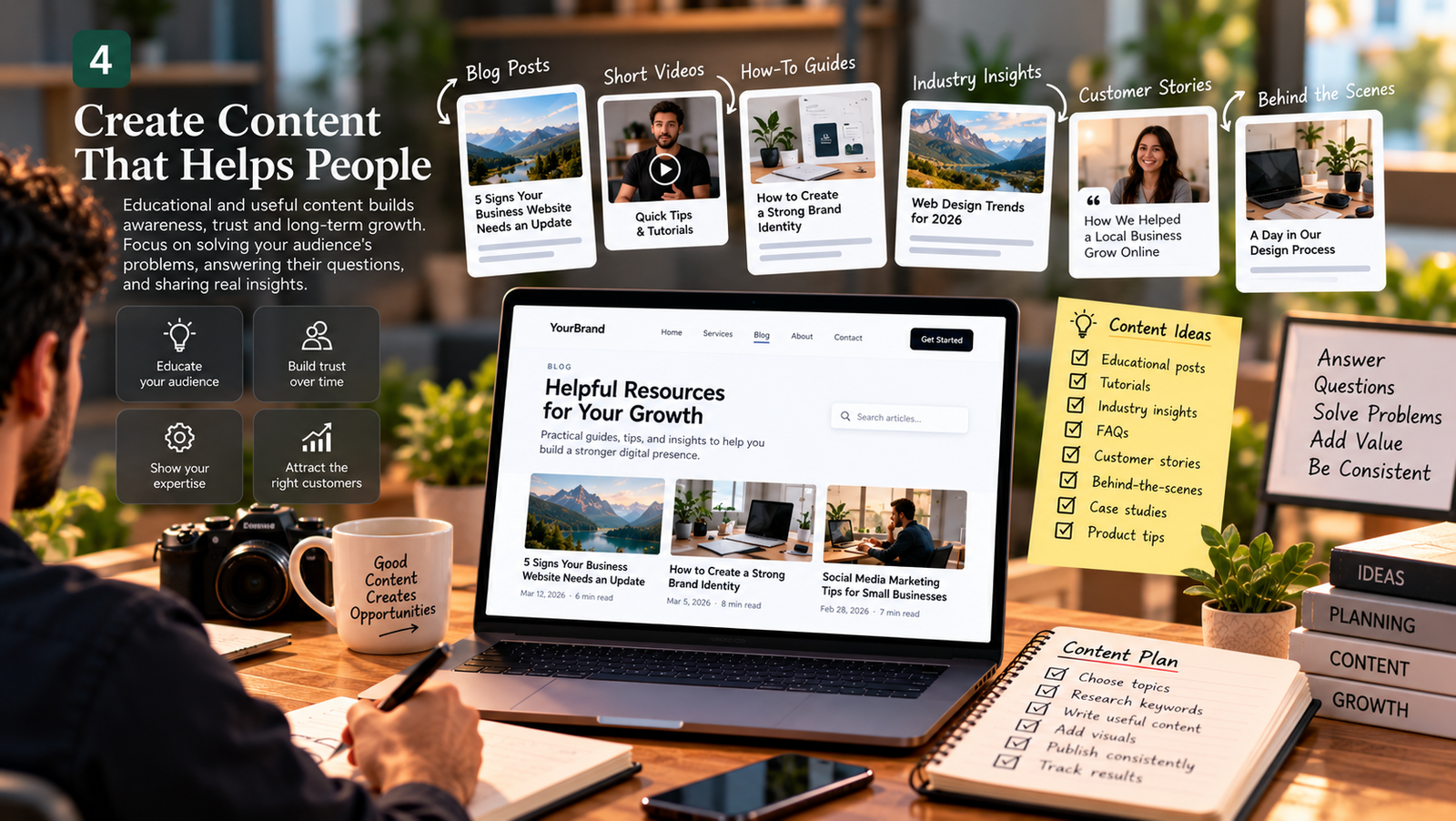
Content can help potential customers discover your business while demonstrating your knowledge and expertise.
Instead of making every post a sales pitch, create material that helps people solve problems, learn something useful, or make better decisions.
Depending on your industry, you could create:
- How-to guides
- Educational articles
- Short-form videos
- Industry tips
- Answers to common questions
- Customer experiences
- Product walkthroughs
- Behind-the-scenes posts
- Case studies
For example, a web designer could publish an article such as:
“5 Warning Signs That Your Business Website Needs a Redesign”
A fitness professional could create:
“Easy Ways to Add More Movement to a Busy Workday”
Helpful content can attract people before they’re ready to purchase and gradually turn that attention into trust.
5. Optimize Your Google Presence
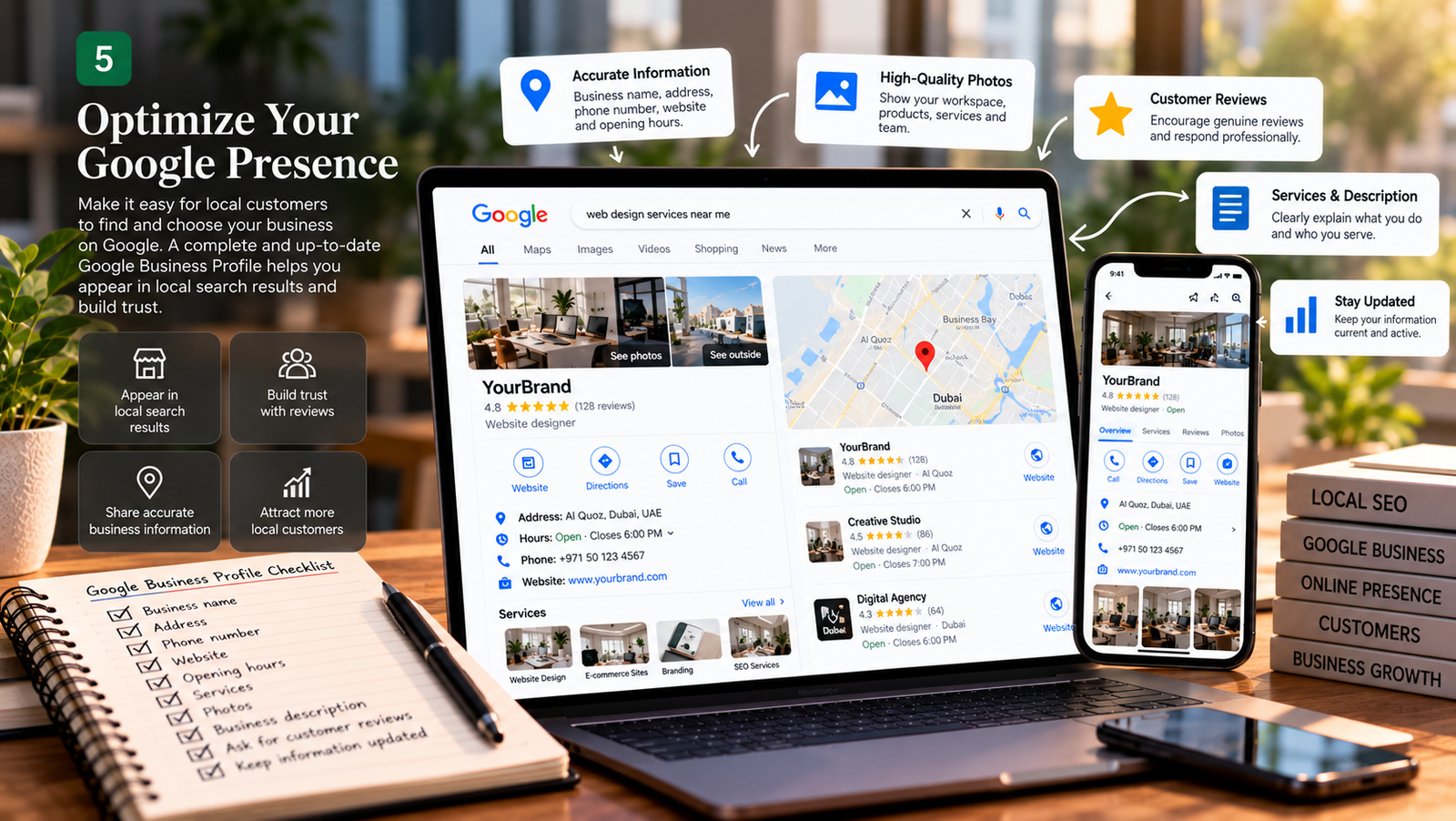
If your business serves customers in a particular area, your visibility in local search can have a significant impact.
Set up and maintain your Google Business Profile with current and accurate details.
Your profile should contain information such as:
- Business name
- Location
- Contact number
- Website
- Opening times
- Services
- Photos
- Business description
Ask satisfied customers for honest reviews and respond to feedback in a professional manner.
Also check that your business information is consistent across your website, social profiles, and relevant online directories.
Accurate information makes it easier for potential customers to find and contact you.
6. Focus on Search Engine Optimization
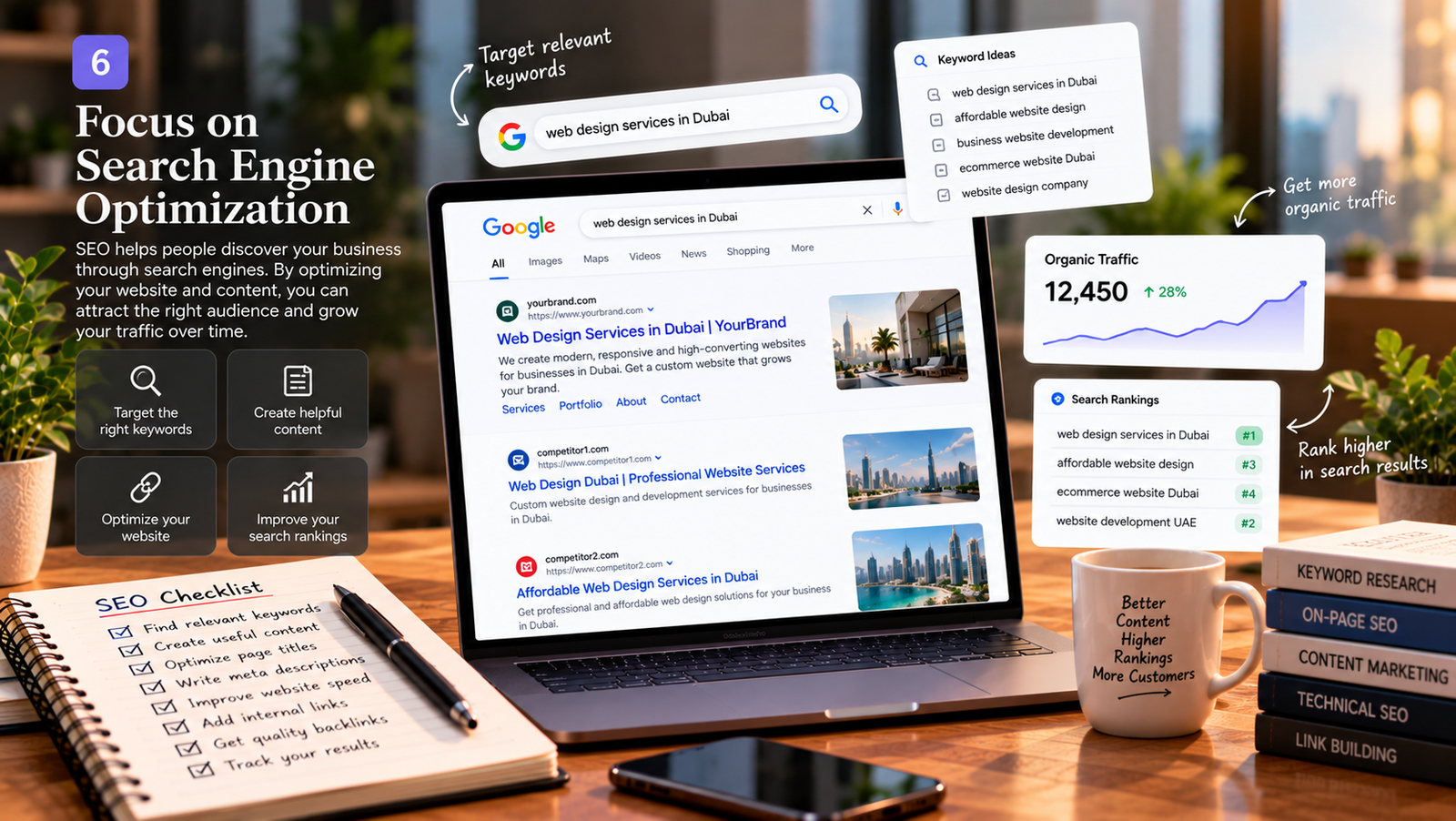
Search engine optimization can help your website appear when people search for products, services, or information related to your business.
You don’t need to tackle every SEO technique at once.
Begin by understanding what your target customers are searching for and create useful content around those topics.
For example, a business may get more relevant visitors by targeting a specific search such as:
“Affordable website design for small businesses”
rather than relying only on a broad phrase such as:
“Web design.”
Optimize your important website pages, write helpful articles, improve your page titles, and create content that genuinely answers search queries.
SEO generally takes time, so focus on building sustainable visibility rather than expecting immediate results.
7. Build Trust Through Social Proof
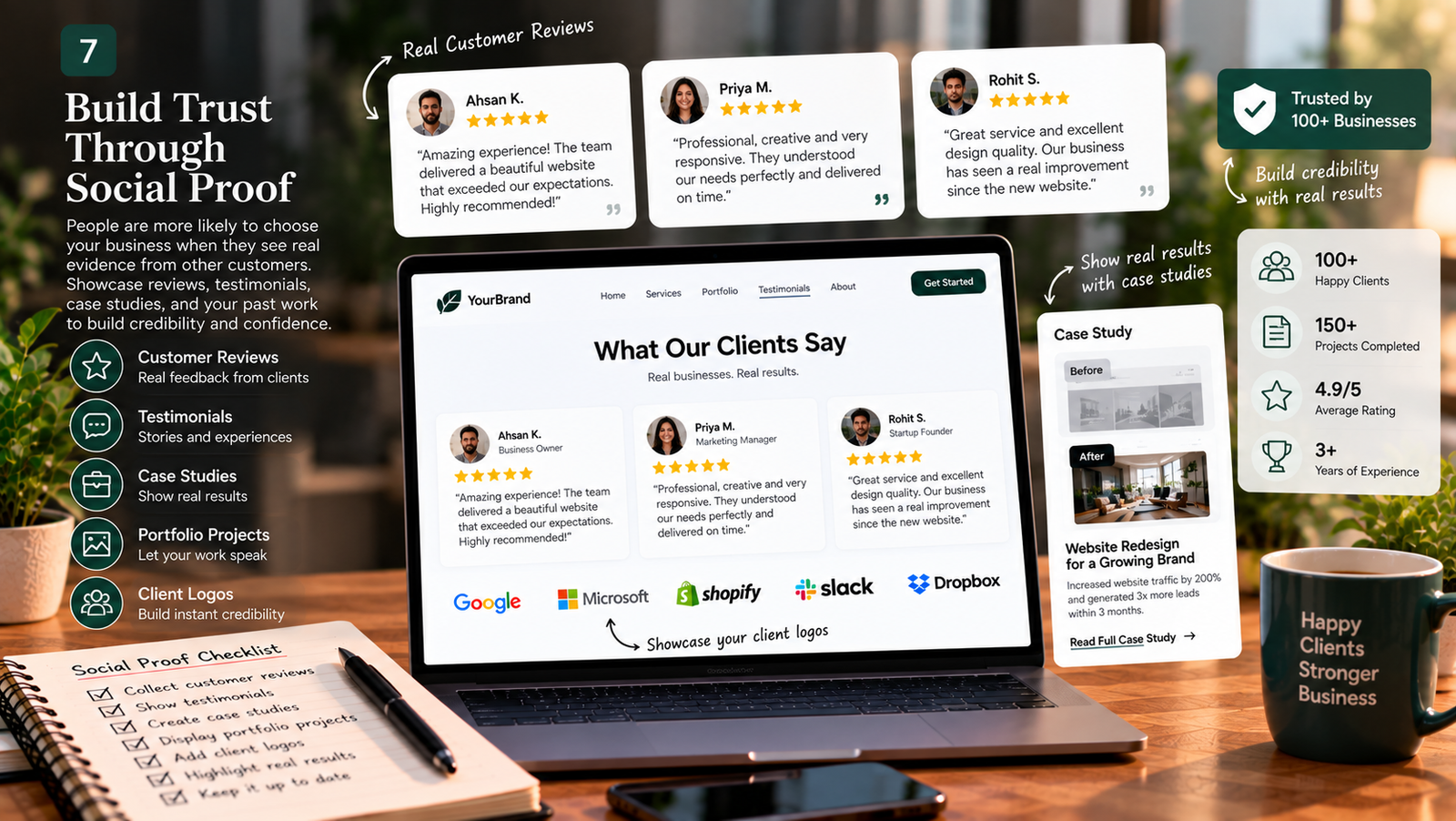
Before purchasing from a new company, many people look for signs that others have had a positive experience with it.
Make those trust signals easy to find on your website and digital channels.
Consider showcasing:
- Customer reviews
- Testimonials
- Case studies
- Completed projects
- Client logos
- Portfolio work
- Before-and-after examples
- Measurable results
Rather than simply claiming that your company provides excellent service, demonstrate it through real examples.
Specific results and genuine customer experiences can be far more convincing than generic marketing statements.
8. Use Email Marketing
Social platforms give you access to an audience, but you don’t control how their algorithms distribute your content.
An email list gives your business a direct communication channel with people who have voluntarily provided their contact information.
You can use email campaigns to share:
- New products or services
- Useful articles
- Promotions
- Business announcements
- Educational resources
- New releases
You don’t have to email your subscribers constantly.
A well-planned newsletter once or twice a month can be enough to maintain a relationship with your audience, provided each email offers something useful.
9. Use Paid Advertising Carefully
Organic marketing can take time. Paid advertising can help you reach relevant audiences more quickly when it is planned properly.
Platforms such as Google and Meta offer advertising tools that allow businesses to target specific audiences and objectives.
Before launching a campaign, establish:
- Who you want to reach
- What you want them to do
- What you’re offering
- How much you’re willing to spend
- Which landing page you’ll use
- How you’ll measure success
Start with a controlled budget and use the initial results to learn.
Don’t judge an advertising campaign solely by impressions or clicks. The more important question is whether those visitors are generating leads, purchases, bookings, or another meaningful business outcome.
10. Track What Is Working
One of the biggest advantages of digital marketing is the amount of information you can collect about your performance.
Depending on your objectives, useful metrics may include:
- Website traffic
- Traffic sources
- Social media engagement
- Leads generated
- Click-through rate
- Conversion rate
- Cost per lead
- Revenue
- Customer acquisition cost
You don’t need to monitor every number available.
Choose metrics that connect directly to your business goals.
For example, if a particular type of article consistently brings qualified visitors to your website, that may be a signal to create more content around similar topics.
11. Keep Improving Your Strategy
Your first digital marketing strategy doesn’t have to be perfect.
What works today may not produce the same results several months from now. Customer behavior changes, platforms evolve, and new competitors enter the market.
Treat your digital presence as something that develops over time.
A simple process is:
Create → Publish → Analyze → Learn → Improve
Test different topics, content formats, headlines, offers, platforms, and campaigns.
Pay attention to what produces meaningful results and gradually put more effort into the strategies that work best for your business.
Final Thoughts
Building a strong digital presence is a gradual process. You don’t need a huge marketing budget, a large team, or an enormous social media following to begin.
Start with the fundamentals:
Create a useful website.
Develop a recognizable brand.
Choose platforms that match your audience.
Publish content people find useful.
Demonstrate your credibility.
Measure meaningful results.
Improve your approach over time.
A successful online presence is rarely created overnight. It grows through consistent effort, useful content, customer trust, and continuous improvement.
Ready to Improve Your Digital Presence?
Whether you’re working on your website, branding, content, SEO, or overall digital marketing strategy, taking the first step can make a significant difference.
Get in touch → and start building a stronger online presence for your business.
.